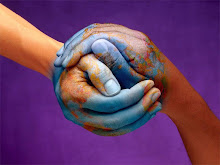
“Once your awareness becomes a flame, it burns up the whole slavery that the mind has created.”
- Osho
Today, when a friend and I were visiting a small farm house with a few horses, we met a man who had an Argentinean Criollo. The sturdy little gelding was absolutely beautiful, but eyed us suspiciously from the moment we entered his range of vision. His owner was grooming the horse and I immediately noticed how slowly and deliberately he was moving around him. Before the man could really say anything to us about his horse, my friend marched over to the paint which was tied to the wall of the farm, and pushed both of her hands into his face, rubbing his forehead vigorously.
“You are so cute,” she said loudly and then proceeded to energetically pet the animal’s neck. I winced at the gesture, even though I used pet horses in the same near violent manner some years ago. The horse stood still, but a barely noticeable quiver of panic went through his body and his eyes bulged in his head. I wanted to physically pull my friend away, but at that moment the owner of the horse interfered. He took a step closer to his horse, wedging himself slightly between my friend and the animal.
“This is Arizona. He is quite sensitive and not so sure about people,” he said.
You would think this would have deterred my friend, but she is not one to take hints. Perhaps this is the very reason she seems to have zero ability to read horses, a trait that will undoubtedly one day get her into a lot of trouble. She pushed her hands back into the horses face and this time Arizona backed away, visibly scared. Finally my friend stopped touching the gelding, but still didn’t back away. She turned to look at me, still clueless.
“He is so cute, isn’t he?” She said, with a broad smile on her face.
It was obvious that my friend was not at all aware of the fact that she was frightening Arizona. Nearly every time we are around horses together, I have witnessed behavior from her part which is either dangerous or disrespectful to the horse. Heaven knows I have tried to address these issues, both diplomatically and less so, but with no luck. She does not seem to understand what I’m saying and my good intentions end in awkward silences and blank looks.
I have come to realize that no matter how hard I would like my friend to change her behavior around horses, I cannot force this change. A person cannot change something of which they are not aware. This is perhaps the first lesson I learned 30 years ago when I started teaching vaulting and riding as a young teenager. Since then, it has always been awareness that I strive to bring to my students. When they see what is happening, when they feel their own mistake, they can start realizing the consequences of their own actions. When I was still teaching traditional riding, it didn’t seem to take long for my students to catch onto what I pointed out. Everything was one-dimensional; the rider pulled on the reins unintentionally – the horse slowed down. The rider kicked the horse too hard – the horse scooted off. But now… bringing people’s attention to the subtle cause and effect patterns they are stuck in with their horses is one of the hardest things to do. It is especially difficult when the person in question is not ready to enter such a state of consciousness.
And even when we think we have all the awareness in the world, holding onto it may be the hardest thing we ever do. We are only human and can sometimes make human sized mistakes. Being aware of our place in the universe, of our actions and the impact we have on every living being is like holding quicksilver in the palm of your hand. This deeper level of consciousness escapes us when we least expect it, slipping away just when we think we have it trapped completely. To catch that moment, to return back to that world that is separate from our human world, is like catching quicksilver: one must have quite a bit of patience and motivation and perseverance. Lucky for us humans, horses have all three. I don’t think they will ever cease to bring us back to any given lesson over and over again, until we get it. And this means that perhaps one day my friend, too, will learn to become more aware of her own personal cause and effect .
Over ten years ago, when I was still a vaulting coach, I met a horse called Designer Socks. Socks was an interesting character to say the least and anyone who had the privilege to know him can testify to this. This was a horse who couldn’t speak the human language, yet he spoke volumes of what he liked and disliked, what he wanted and what he didn’t want. Because of this, he had a reputation of being difficult. In fact, when I met him, I called him that myself. Now, in hindsight, I realize that there really is no such thing as a difficult horse, there are just opinionated ones. And then there are truck loads of ignorant humans. Which perhaps is the reason some horses choose to be so animated; they would never get through to us otherwise.
I can’t say I was always quick to catch on to what Socks was pointing out, but he was relentless; he would spell his message out until even a hardheaded equestrian like myself got the picture. And once I allowed myself to listen to Socks, he taught me more than any horse before him had, opening my eyes to so many things.
Socks was extremely sensitive and particular. He would perform beautifully under saddle, but only when he felt like it. If you pushed him too much, he exploded, becoming hotheaded and hyper within seconds. And once he got that bee in his bonnet, there was nothing - short of stopping everything at once- that would calm him down. To ride this horse you had to know him and work with him. And it was the same when it came to vaulting on him. Socks willingly participated in vaulting, but only under one condition: that we did it his way. Forget training a routine for hours; forget running through a team freestyle program several times at the canter. Oh no. The team could have one go at it and then Socks was done. If the vaulters were having a particularly bad day (which meant they were imbalanced or sloppy), he wouldn’t give them even that one go. Which, to think of it, was completely fair. Why would Socks have to be at his best, when other (human) members of the team weren’t?
Sometimes Socks’ messages were extremely subtle and encoding the meaning behind certain behavior would take me more than a few tries. Take for example the issue with the sunglasses. As we were living and practicing in California, there was a lot of sunshine. Coming from Finland, my eyes were especially sensitive and when summer came around, I wore sunglasses nearly all the time. Socks, however, didn’t like this one bit. He this behavior very suspicious, especially when I was lunging him on a circle for vaulting. In the spring, it took me a while to realize it was the sunglasses that had caused the change in him. Once I removed them and Socks could see my eyes again, he was back to his normal self. After that day, I have avoided using sunglasses around horses altogether.
I have since realized that there are many other minor details in the human behavior that can bother horses; hats, perfume, body lotion, laundry detergent - to mention a few. I have noticed that my horse Little Love definitely acts different when I have lathered myself in a body lotion with a strong scent. The first time this happened a few years back, she flared her nostrils and moved away from me, as if I was a stranger. Now I make an effort to never use scented lotion before going to the barn, and have switched to an ecological, scentless laundry detergent in her behalf. Luckily I was never one to wear perfumes in the first place!
Last week, when I was spending time with my mare, Little Love, I received a call on my cell phone. The caller was a young boy whom I had had the privilege to coach in floorball on and off for the past few years. I had seen this boy, now a teenager, grow from a beginner into a skilled athlete. Weeks before all his hard work had paid off and he had been invited to try out for a regional team. This in itself had been big news, but I knew he was calling to tell me the results of the tryout camp.
“Hello,” I answered and saw Little Love, my mare, pin her ears back. Distracted, I ignored the gesture and continued brushing her, holding the phone to my ear with my other hand. I was hoping to have enough time to go out for a walk and I was a bit pressed with time. I moved around her briskly, at the same time listening to what the young boy had to say at the other side of the phone conversation.
Little Love pinned her ears back several times and she stomped her foot; she swished her tail and yanked her foot out of my hand when I was picking the hooves. At that point I should have had the sense to walk away from her, but since I was more focused on the phone conversation, I kept on working around her. And it was a long conversation. By the time I was done talking on the phone, Little Love was tacked up and ready to go. But she didn’t seem ready mentally. Somehow, during the grooming and tacking process, she had become irate and nervous. She stood tied to the grooming rail with her nostrils flaring and her head held high. I could see the whites of her eyes and she paced nervously.
I looked at my horse impatiently. What in the world had gotten into her? Seeing she was anxious and overly energetic, I decided to take her into the arena first, to assess the situation before venturing out. The weather had changed two days earlier and now that the rains had set in, the temperature was much lower. Perhaps the change in weather was causing this behavior? That day was also fairly windy, which I immediately pegged down as another cause for Little Love's "irritation". Obviously I didn't have the brain space at that moment to think very creatively.
In the arena I asked Little Love to trot on the long rope. She literally looked at me and sighed, then started trotting around me with a sour face. A funny feeling filled my chest, as if I had forgotten something important. At first I thought I was feeling nervous about going out with Little Love on such a windy day, but soon realized this was something else. I looked back at what we had done together so far and that was when the thought hit me in the head like a ton of bricks: the phone.
How would you feel if you were having dinner with one of your best friends and in the middle of your time together, she would suddenly start talking on the phone, completely ignoring you, yet continue eating her dinner, as if nothing was wrong? I’m sure you would be hurt – at least I would. I would also feel annoyed and neglected. I would probably want to walk away from the situation.
When we are with horses, we must be with them 100% or not at all. This is a lesson Little Love has taught me over and over again. Staying in the moment is paramount. But of course when you are on the phone, staying in the moment becomes impossible. I believe I knew that already, but somehow had forgotten it. Yet again. Obviously it was time for me to "relearn" it that day.
The realization of how rudely I had just treated my friend came over me like a huge wave.
"I am so sorry," I said out loud to Little Love. "So, so sorry. I can't believe I did that to you."
She licked her lips. I swear she was thinking: "Well duh, finally you have a clue!" I am a slow learner at times.
I have been thinking about Socks a lot lately. I can now see that he had more lessons in store for me than I was able to handle at the time. Perhaps I was a bit like my friend is now, like an elephant in a china shop. And I still have a long way to go. Perhaps that is why Little Love came along the way, to continue the work Socks started. I don’t know if this work will ever be completed, but I sure am trying to be the best student possible and catch that quicksilver. Like they say: the teacher will appear when the student is ready, and I’m definitely ready now.
What comes to that windy day last week when I was talking on my cell phone… After I realized my mistake and sincerely apologized for it, it was as if a switch went off in my horse. She stood by me calmly and all signs of nervousness were gone. We walked out through the barn gate and took a long walk on the trails in the cool summer weather. The strong wind didn’t bother either one of us, quite the contrary, it kept the bugs at bay when we stopped in the middle of the emerald field to graze on the tall, abundant grass. And again, I felt like I was holding that infamous quicksilver in the palm of my hand for a short, glorious moment.
~K
“The mind, this globe of awareness, is a starry universe that when you push off with your foot, a thousand new roads become clear, as you yourself do at dawn, sailing through the light.” ~Rumi
Monday, June 27, 2011


Wednesday, May 25, 2011
Embrace the World Within

Going into this second experience, called Accessing Authenticity, was very different. This time I would attend the workshop with Melissa, my best friend. I also wanted to believe I had evolved emotionally in the past two years. But, I also knew that whatever my expectations were, they would pale in comparison to the reality. I was right. I may have been prepared for the wisdom horses have to offer, but their uncanny ability to look into my heart and see what nobody, even myself, had not seen before still does not seize to amaze me.
Perhaps the most revealing of sessions happened with Bramble, a white pony that I felt drawn to from the first time I saw her. It wasn’t her outer appearance that interested me (although she was very cute!), but rather this feeling that she had a message for me. So, when we could choose the horse for our reflective round pen session, the choice was really not mine, but Bramble’s.
I have to mention that last time I did reflective work with a horse in the frame work of an Epona course, my biggest problem was the interference of my head. Most of us have this problem; our thoughts and rational thinking get in the way of what our body and soul is trying to tell us. It is not the easiest task to shut this “voice of reason” off. In fact, it is what Linda Kohanov calls The False Self that often runs our life, giving us no time or space to really feel who we are. Social conditioning, self-judgment, assumptions of others, our need to seek approval, our critical and controlling beliefs are all different ways for the False Self to interfere with our intuition, our Authentic Self.
With this in mind I approached the round pen; I was determined to shut off my False Self and give room to whatever was to come, no matter how irrational or confusing this information may be. The object of the exercise was to treat all emotions, images, words or whatever else appeared as valuable information. This was not about succeeding or achieving a set goal; this was about being in the moment and really listening.
Standing outside the round pen and facing away from Bramble, I started with a body scan. Silently, with closed eyes and my arms hanging loosely on my sides, I “scanned” my body for feelings of pressure, pain, heat, cold – any sensation really. I was immediately drawn to the feeling of pressure around my throat and chest. It was not a painful feeling, but rather felt as if I had a heavy blanket wrapped around me, pressing on the front of my shoulders. Through this pressure I could feel my heart beating in my chest; a strong, clear rhythm, as if standing there required physical effort. I asked myself what was the message behind this feeling and received a picture of myself holding a large ball. When I focused on that image, I could feel my heart beat dissipate into the rest of my body, still pulsating, but with less vigor. This was a sign that I had understood the message my body was trying to tell me. Without questioning this perhaps confusing information I ordinarily would have dismissed as “stupid” or “weird” (A ball? Makes no sense. Why was I holding it? etc.), I turned around and looked at Bramble. She was standing in the round pen, staring at me intently with her ears forward. I closed my eyes again, opening my mind to any other images or messages that would come from the horse.
Immediately, as if I was watching a powerful dream, I had a vision of a very small door. It was in the middle of a stone wall far, far away. I had a strong feeling I was supposed to go through the door, but I could see it was closed. I silently asked Bramble what this meant, could she possibly help me? When I opened my eyes again to look at her, I knew she had the key to this door.
Rosie, the facilitator, asked me what was going on. I filled her in. She nodded and said:
“Do you feel like you need more information on what this is about or do you feel ready to go into the round pen?”
This is the brilliance of being part of the Epona method. I’m fairly sure nothing I said could have fazed Rosie. I had told her about my images about the ball and the door, and in any other context this would have made no sense whatsoever. Imagine trying to explain this to a stranger; I would have sounded crazy. And perhaps you, too, now reading it, are thinking I have lost my marbles once and for all. But it all felt natural. I was confident and relaxed going into the round pen.
I walked over to Bramble and gave her a horse-human handshake, extending the back of my hand out for her to touch. Then I stepped back, closing my eyes. Immediately I was taken back to the image of the door. I asked Bramble what I should do with the door, did she have the key?
“No, no key,” she answered, “The door is already open.”
And she was right, for in that moment I saw the whole wall split open. Suddenly I realized that I was holding the ball again, it was enormous and my hands barely reached around it to steady it on my chest. But now I saw it was not a ball after all, it was the Earth; I had the entire world in my arms. I held onto it tight as I stepped through the wall, towards light.
And that is when I understood what Bramble was trying to help me understand. For some months now I have been planning a move to Finland. Despite this move being a choice that I made with my husband, I have been extremely anxious about the decision. Should we have decided to go to California instead (this is where we lived before Switzerland)? Are we taking a risk going to Finland? What if it doesn’t work? What was there really in Finland for me? In the midst of the logistics of the move, the concrete, everyday tasks, I had not allowed myself to truly reflect on my true emotions concerning the move.
I was filled with a strong sense of knowing, which I cannot even begin to describe, as words have their limitations. I realized I had lived in Switzerland for six years, but had never truly been happy there. Why? This question has gone unanswered until that very moment in the round pen. I have met many wonderful people in Switzerland, people whom have made a definite impact on my life. But, despite these friendships, I feel strongly disconnected from the world around me. This probably partly stems from the fact that during my years in Switzerland, I have gone through some major changes in my life, searching for the right path with horses and myself as a person. In other words, I feel separate and detached.
Moving to Finland is an opportunity to change this. In Finland I will be welcomed by a group of close friends, but also a larger network of like-minded people with whom I have connected long distance over the years. For the first time since I left California six years ago, I have the opportunity to be part of a true community; to be supported and accepted as who I am. The realization of this was profound and I felt like a weight was lifted off my chest. Hope for the future was restored. In fact, as my eyes were still closed, I saw the enormous globe I had been holding slowly sink into my chest, as if I was swallowing Mother Earth itself. And isn’t this true? Community is not something outside of us, but rather an internal phenomenon that we cherish and that connects us to others. Instead of seeing myself as someone roaming the earth looking for answers, I needed to embrace the world within.
I had been squatting down on the ground, but now I stood up and opened my eyes. Bramble was looking at me quizzically with her wise, beautiful eyes. I stepped to her side and said a silent thank you. She touched me with her nose and the air was filled with gratitude. Then she walked to the gate as if to say “my work is done.” Which it was.
I left the round pen with a newly found peace. Life would be alright, I would be alright. Why had I not seen this all before? I had been so focused on getting myself, my horse, my family to Finland, that I had not taken the time to stop and realize what moving back to my home country really meant to me. When I returned to my chair and recapped the round pen experience to Rosie and Melissa, I became very emotional, but in a good way. The tears that surfaced were tears of relief and joy and hope, tears I should have shed a long time ago, instead of bottling them deep inside.
Intuition is perhaps the most important piece of our genetic makeup. Unfortunately it is usually the first piece we lose, when life gets the best of us. Most people ignore their intuition. Actually, most people wouldn’t even recognize their intuition, even if it hit them in the head (which it often does…). Animals, such as horses, operate in the world using their intuition, their sixth sense of “knowing”. Often I think that our ability to speak is what stifles our innate knowing of what we need, what is right for us, and only us. The great French writer, Gustave Flaubert, wrote about this in his first novel, Madame Bovary, when he said that “…the truth is that fullness of soul can sometimes overflow in utter vapidity of language, for none of us can ever express the exact measure of his needs or his thoughts or his sorrows; the human speech is like a cracked kettle on which we tap crude rhythms for bears to dance to, while we long to make music that will melt the stars.”
I left England and the Epona course with a better sense of knowing. I felt more at peace than I had for a long time, more in my body rather than in my head. So often, especially in a time of turmoil, my head takes over and I am plunged into a destructive pattern of frantic thinking. I am not saying thinking is a bad thing, but enough is enough. Sometimes we need to stop and take tally of what we really feel and where those feelings are coming from. What are those feelings telling you? What is the message of your intuition? What does your heart desire?
I believe that if we open ourselves to life, life will flow freely into our bodies and we will be able to feel the present moment more deeply. Yes, this can be scary at times, as often there are emotions within us that are not comfortable. But each emotion is a pool of information. If we learn to treat our feelings as messages from our heart, our lives can have so much more meaning.
I thank Bramble and all the horses in the world for not giving up on us humans. You seem to always be ready to help us the moment we are ready to receive the help. I don’t think I can ever understand this gift you have, but I know I will admire it forever.
~K
Wild Geese
By Mary Oliver
You do not have to be good
You do not have to walk on your knees
for a hundred miles through the desert, repenting.
You only have to let the soft animal of your body
love what it loves.
Tell me about despair, yours, and I will tell you mine.
Meanwhile the world goes on.
Meanwhile the sun and the clear pebbles of the rain
are moving across the landscapes,
over the prairies and the deep trees,
the mountains and the rivers.
Meanwhile the wild geese, high in the clear blue air,
are heading home again.
Whoever you are, no matter how lonely,
the world offers itself to your imagination,
calls to you like the wild geese, harsh and exciting - -
over and over announcing you place
in the family of things.
To learn more about Rosie and her courses, go to http://horsesasteachers.co.uk/
To learn more about Epona, go to http://www.taoofequus.com/
Tuesday, April 26, 2011
To live life backwards
“When written in Chinese the word ‘crisis’ is composed of two characters – one represents danger and the other represents opportunity.” - John F. Kennedy
It was an ordinary day, apart from the fact that I was in a hurry; I was leaving for a trip the next morning and still had a lot of packing to do. When I arrived at the barn in the late afternoon, I did my usual chores. The horses had been outside all day enjoying the sunshine, but as I was finishing up with the evening feed, they showed up. I looked at my watch; it was only 5 pm. I had done the chores faster than usual. Should I take the horses out for a quick ride or should I go home and pack? I chose to ride.
I tacked up my friends gelding. His owner was gone on a business trip and as usual had asked me to ride. Since I was leaving for a few days myself, this was my last chance of doing this. I slipped a halter on my mare and climbed on the gelding while my mare waited patiently next to him; she knew the drill already.
We crossed the busy road without incident and headed through the field to take our normal “short loop”. When we made it to the other side I hesitated for a moment, but then took a left instead of the usual right. Going to the left meant a longer ride, but less cars, less commotion and a safer ride – or so I thought.
When we entered the forest, I took a sharp right up the hill, planning to cut through the trees to the other side, pass the single farm on the left, descend the hill and return home through the field. Perhaps there would be a chance to get some trot in on the long rise through the forest.
We passed a lonely car parked on the side of the road. I peered into the old Fiat and saw a young man leaned back in his seat resting his bare feet on the dashboard while smoking a cigarette. I’d never seen a car on this particular road and neither had the horses, but they didn’t seem to care.
I directed the gelding onto the soft part of the otherwise paved road and my mare followed in hand. We started trotting up hill. I could smell the pine trees as the sun rays beamed through the branches. Both horses made relaxed snorts and I could feel the geldings relaxed muscles working under the saddle.
I don’t know where the cow came from, but it seemed to materialize from thin air. It stood on top of the hill and looked like it had been waiting for us to come out of the forest. It was white and stood majestically on the side of the road in a solid frame.
The gelding stopped in his tracks. My mare followed suit. Neither horse was in particular afraid of cows as the gelding had lived most of his life on a dairy farm and my mare in the close vicinity of one. But despite this history with the bovine, I could feel the gelding’s heart pounding in his chest and between my legs. I glanced at my mare on my left. She was alert, but not fearful.
Previously, when I had taken the two horses out together, I had encountered much scarier things than this white cow. The gelding was a relatively brave soul, but when in doubt, he froze in place, refusing to move until he felt the coast was clear. I respected his choice and never tried to force him forward as that merely resulted in vigorous resistance.
When the situation calls for it, I always dismount and walk the frightened horse past the scary object. My mare, who is not the bravest soul under saddle, seems to have unquestionable trust in me when I’m on the ground. This, when we are out all together, in turn helps the gelding, who snaps out of his frozen position and follows my mare.
So, short of any other ideas, I dismounted.
The very second my feet touched the ground, something happened. Perhaps the cow moved or made a noise. I don’t know, because I was busy coming off the horse. Whatever it was, it made the gelding do something very unusual to him, but not unusual to horses; he turned around and ran.
He rammed into me, toppling me over. My mare was only a fraction of a second behind his movement. I held on to the reins only long enough to realize that holding on was not going to help. I could only watch, helplessly, as the two horses gained speed on the downhill slope.
What went through my mind? I saw my mare slip and fall; she went almost completely down, skidding across the pavement while she was scrambling back to her feet. How she managed to get up within just fractions of a second I could not fathom. I watched in disbelief as the two horses disappeared around the bend. Instinctively I ran after them, thinking about the busy road between that moment and the barn. I have never felt so powerless, so utterly incapable of controlling the future as I did then.
Next thing, I saw the young man we had passed earlier racing up the hill towards me in his beat up red Fiat. He stopped on my side, his windows rolled down.
“Hey,” he shouted over the noise of the engine, “are you alright? I saw the horses.”
“Yes, I’m fine,” I said quickly. “Can you help me?”
He nodded and pushed the door open. I was barely in the seat when he was already peeling down the road, following the horses.
We all know the brilliant wisdom of hindsight; knowing exactly what we should have done, but didn’t. Should have could have would have. I can’t tell you how many times I have gone through the events of that particular day in my head. Why did I ride the gelding that day? Why did I take my mare with us? Would it have made a difference had I been alone with the gelding? Did I come off because I genuinely thought I could get the two horses past the cow or did I come down because my instinct told me this was the safe thing to do? If I had stayed in the saddle, could I have stopped the panic fed frenzy of this large animal? Or, would I have gotten seriously hurt in the process?
There are so many questions to which I will never know the answers. Oh, how I wish I could turn back time.
But unfortunately time does not work backwards. There are many things you can redo in life; a math test, your kitchen paint job or even the nose you inherited from your father. But, no matter how hard you try, you cannot turn around time. So, when mistakes are made, the only option is to deal with the situation and hopefully later learn from it.
So many things went wrong that day. However, on the same token, so many things went right, as well.
The young man drove to the bottom of the hill where I had entered the forest. There was not a sign of the horses and I prayed they had taken the sharp left towards home instead of going straight where the big road loomed in the distance. I held onto the dashboard as we took the turn in the little car, my heart racing in my chest.
We drove down the road on the side of the field and immediately saw the horses in front of us. They had slowed down to a trot, but were still moving at a brisk pace. How could we stop them before they took the last leg through the field towards home and the big road? I didn’t know.
The man slowed his car down, obviously fearful of further upsetting the horses. I told him to hurry, as I knew what would happen next. And I was right. Suddenly the gelding took a sharp right down a tractor path that led directly to the horse pasture on the other side of the busy road. I looked up and saw cars whizzing by at high speeds. No, I thought. No. Anything but the road where drivers coming around the blind turn would not have time to stop. Horses would get hurt. And not just horses, people, too.
The man looked at me frantically. I watched the horses a good 30 yards away trot towards the traffic with their heads high, their step determined; they wanted to go home. I wanted to scream at them, I wanted to beg them to stop. I also wanted to take back the past hour of my life and start all over again, with the right choices.
Short of better ideas, I did the one thing I could think of; I stuck my head out of the car window and called my horse.
“Little Love!”
Even to my own surprise, my voice didn’t sound desperate, nor did it sound panicky. It sounded just as calm and hopeful as it did when I called her in from the field to eat dinner.
“Little Love!”
And that is when it happened. My black mare, who had been trotting beside the gelding, stopped in her tracks and turned to look at me. The gelding stopped, too. And against all odds, time seemed to stop, too. I hung out of the car window and the horses stood still in the middle of the field. For a very long second the three of us merely stared at each other. Then the horses blew air out of their noses and lowered their heads to eat grass, as if nothing out of the ordinary had happened.
And just like that, the situation was over.
The young man stopped his car on the side of the road and I got out, my whole body shaking from both adrenaline rush and relief. I walked down the field to the horses and both touched me with their noses, visibly relieved to see me.
Neither horse was seriously hurt. Little Love had some scrapes down her side from the fall and the gelding was stiff at the shoulder, but both horses healed miraculously within a week. The traffic on the road went on uninterrupted. The man, who helped me, drove off to continue his day and undoubtedly tell his friends about his adventure catching two runaway horses. And I… I was in one piece, unharmed physically. Yes, my rider’s ego was crushed and the embarrassment I felt over the episode was colossal, but I had also lived to tell the tale.
When I look back at the events of that day, my primary feeling is failure. As someone who has been involved with horses for over 30 years, it is hard to accept that with all the knowledge and experience I possess, I still managed to get myself in a dangerous situation involving two horses. What did I learn? That I was starting to be overconfident in my dealings with horses? Perhaps I needed to be reminded that really, there is no such thing as control, when it comes down to it. Perhaps it was time for me to learn to be humble. And more cautious. Is this how people become afraid of horses? Will I ever be able to relax on a trail ride again?
I have been out since, walking my mare in hand and have to say that the first time we passed a herd of cows I was more on edge than usual. And so was she. But maybe she was nervous only because I was nervous. I can already feel the ramifications of history taking hold of the future. I remind myself that horses live in the here and now; if it is not happening now, it’s not happening. But despite my efforts, my human brain keeps returning to the events of that day. Was the ultimate lesson of all this merely to show me how vulnerable I am in the face of these big animals? Or was the lesson something even more profound; that no matter what happens, I must learn to trust, over and over again?
Perhaps with time thinking back can help me see what really is important; the relationship I have with this particular horse, with Little Love. Sometimes bad things happen and illusions of perfect harmony are broken. But, in the meanwhile, if we can see the good from the bad, hope is also restored.
I have a feeling that years and years from now, I will still recall how it felt to watch the two horses canter away at full speed. But, I know for sure that I will never forget the moment when I called the name of my beautiful black mare and - after all that had happened - she stopped in her tracks to look at me.
Gratefully,
K
“Nobody gets to live life backward. Look ahead, that is where your future lies.” - Ann Landers
“Having harvested all the knowledge and wisdom we can from our mistakes and failures, we should put them behind us and go ahead.” - Edith Johnson
It was an ordinary day, apart from the fact that I was in a hurry; I was leaving for a trip the next morning and still had a lot of packing to do. When I arrived at the barn in the late afternoon, I did my usual chores. The horses had been outside all day enjoying the sunshine, but as I was finishing up with the evening feed, they showed up. I looked at my watch; it was only 5 pm. I had done the chores faster than usual. Should I take the horses out for a quick ride or should I go home and pack? I chose to ride.
I tacked up my friends gelding. His owner was gone on a business trip and as usual had asked me to ride. Since I was leaving for a few days myself, this was my last chance of doing this. I slipped a halter on my mare and climbed on the gelding while my mare waited patiently next to him; she knew the drill already.
We crossed the busy road without incident and headed through the field to take our normal “short loop”. When we made it to the other side I hesitated for a moment, but then took a left instead of the usual right. Going to the left meant a longer ride, but less cars, less commotion and a safer ride – or so I thought.
When we entered the forest, I took a sharp right up the hill, planning to cut through the trees to the other side, pass the single farm on the left, descend the hill and return home through the field. Perhaps there would be a chance to get some trot in on the long rise through the forest.
We passed a lonely car parked on the side of the road. I peered into the old Fiat and saw a young man leaned back in his seat resting his bare feet on the dashboard while smoking a cigarette. I’d never seen a car on this particular road and neither had the horses, but they didn’t seem to care.
I directed the gelding onto the soft part of the otherwise paved road and my mare followed in hand. We started trotting up hill. I could smell the pine trees as the sun rays beamed through the branches. Both horses made relaxed snorts and I could feel the geldings relaxed muscles working under the saddle.
I don’t know where the cow came from, but it seemed to materialize from thin air. It stood on top of the hill and looked like it had been waiting for us to come out of the forest. It was white and stood majestically on the side of the road in a solid frame.
The gelding stopped in his tracks. My mare followed suit. Neither horse was in particular afraid of cows as the gelding had lived most of his life on a dairy farm and my mare in the close vicinity of one. But despite this history with the bovine, I could feel the gelding’s heart pounding in his chest and between my legs. I glanced at my mare on my left. She was alert, but not fearful.
Previously, when I had taken the two horses out together, I had encountered much scarier things than this white cow. The gelding was a relatively brave soul, but when in doubt, he froze in place, refusing to move until he felt the coast was clear. I respected his choice and never tried to force him forward as that merely resulted in vigorous resistance.
When the situation calls for it, I always dismount and walk the frightened horse past the scary object. My mare, who is not the bravest soul under saddle, seems to have unquestionable trust in me when I’m on the ground. This, when we are out all together, in turn helps the gelding, who snaps out of his frozen position and follows my mare.
So, short of any other ideas, I dismounted.
The very second my feet touched the ground, something happened. Perhaps the cow moved or made a noise. I don’t know, because I was busy coming off the horse. Whatever it was, it made the gelding do something very unusual to him, but not unusual to horses; he turned around and ran.
He rammed into me, toppling me over. My mare was only a fraction of a second behind his movement. I held on to the reins only long enough to realize that holding on was not going to help. I could only watch, helplessly, as the two horses gained speed on the downhill slope.
What went through my mind? I saw my mare slip and fall; she went almost completely down, skidding across the pavement while she was scrambling back to her feet. How she managed to get up within just fractions of a second I could not fathom. I watched in disbelief as the two horses disappeared around the bend. Instinctively I ran after them, thinking about the busy road between that moment and the barn. I have never felt so powerless, so utterly incapable of controlling the future as I did then.
Next thing, I saw the young man we had passed earlier racing up the hill towards me in his beat up red Fiat. He stopped on my side, his windows rolled down.
“Hey,” he shouted over the noise of the engine, “are you alright? I saw the horses.”
“Yes, I’m fine,” I said quickly. “Can you help me?”
He nodded and pushed the door open. I was barely in the seat when he was already peeling down the road, following the horses.
We all know the brilliant wisdom of hindsight; knowing exactly what we should have done, but didn’t. Should have could have would have. I can’t tell you how many times I have gone through the events of that particular day in my head. Why did I ride the gelding that day? Why did I take my mare with us? Would it have made a difference had I been alone with the gelding? Did I come off because I genuinely thought I could get the two horses past the cow or did I come down because my instinct told me this was the safe thing to do? If I had stayed in the saddle, could I have stopped the panic fed frenzy of this large animal? Or, would I have gotten seriously hurt in the process?
There are so many questions to which I will never know the answers. Oh, how I wish I could turn back time.
But unfortunately time does not work backwards. There are many things you can redo in life; a math test, your kitchen paint job or even the nose you inherited from your father. But, no matter how hard you try, you cannot turn around time. So, when mistakes are made, the only option is to deal with the situation and hopefully later learn from it.
So many things went wrong that day. However, on the same token, so many things went right, as well.
The young man drove to the bottom of the hill where I had entered the forest. There was not a sign of the horses and I prayed they had taken the sharp left towards home instead of going straight where the big road loomed in the distance. I held onto the dashboard as we took the turn in the little car, my heart racing in my chest.
We drove down the road on the side of the field and immediately saw the horses in front of us. They had slowed down to a trot, but were still moving at a brisk pace. How could we stop them before they took the last leg through the field towards home and the big road? I didn’t know.
The man slowed his car down, obviously fearful of further upsetting the horses. I told him to hurry, as I knew what would happen next. And I was right. Suddenly the gelding took a sharp right down a tractor path that led directly to the horse pasture on the other side of the busy road. I looked up and saw cars whizzing by at high speeds. No, I thought. No. Anything but the road where drivers coming around the blind turn would not have time to stop. Horses would get hurt. And not just horses, people, too.
The man looked at me frantically. I watched the horses a good 30 yards away trot towards the traffic with their heads high, their step determined; they wanted to go home. I wanted to scream at them, I wanted to beg them to stop. I also wanted to take back the past hour of my life and start all over again, with the right choices.
Short of better ideas, I did the one thing I could think of; I stuck my head out of the car window and called my horse.
“Little Love!”
Even to my own surprise, my voice didn’t sound desperate, nor did it sound panicky. It sounded just as calm and hopeful as it did when I called her in from the field to eat dinner.
“Little Love!”
And that is when it happened. My black mare, who had been trotting beside the gelding, stopped in her tracks and turned to look at me. The gelding stopped, too. And against all odds, time seemed to stop, too. I hung out of the car window and the horses stood still in the middle of the field. For a very long second the three of us merely stared at each other. Then the horses blew air out of their noses and lowered their heads to eat grass, as if nothing out of the ordinary had happened.
And just like that, the situation was over.
The young man stopped his car on the side of the road and I got out, my whole body shaking from both adrenaline rush and relief. I walked down the field to the horses and both touched me with their noses, visibly relieved to see me.
Neither horse was seriously hurt. Little Love had some scrapes down her side from the fall and the gelding was stiff at the shoulder, but both horses healed miraculously within a week. The traffic on the road went on uninterrupted. The man, who helped me, drove off to continue his day and undoubtedly tell his friends about his adventure catching two runaway horses. And I… I was in one piece, unharmed physically. Yes, my rider’s ego was crushed and the embarrassment I felt over the episode was colossal, but I had also lived to tell the tale.
When I look back at the events of that day, my primary feeling is failure. As someone who has been involved with horses for over 30 years, it is hard to accept that with all the knowledge and experience I possess, I still managed to get myself in a dangerous situation involving two horses. What did I learn? That I was starting to be overconfident in my dealings with horses? Perhaps I needed to be reminded that really, there is no such thing as control, when it comes down to it. Perhaps it was time for me to learn to be humble. And more cautious. Is this how people become afraid of horses? Will I ever be able to relax on a trail ride again?
I have been out since, walking my mare in hand and have to say that the first time we passed a herd of cows I was more on edge than usual. And so was she. But maybe she was nervous only because I was nervous. I can already feel the ramifications of history taking hold of the future. I remind myself that horses live in the here and now; if it is not happening now, it’s not happening. But despite my efforts, my human brain keeps returning to the events of that day. Was the ultimate lesson of all this merely to show me how vulnerable I am in the face of these big animals? Or was the lesson something even more profound; that no matter what happens, I must learn to trust, over and over again?
Perhaps with time thinking back can help me see what really is important; the relationship I have with this particular horse, with Little Love. Sometimes bad things happen and illusions of perfect harmony are broken. But, in the meanwhile, if we can see the good from the bad, hope is also restored.
I have a feeling that years and years from now, I will still recall how it felt to watch the two horses canter away at full speed. But, I know for sure that I will never forget the moment when I called the name of my beautiful black mare and - after all that had happened - she stopped in her tracks to look at me.
Gratefully,
K
“Nobody gets to live life backward. Look ahead, that is where your future lies.” - Ann Landers
“Having harvested all the knowledge and wisdom we can from our mistakes and failures, we should put them behind us and go ahead.” - Edith Johnson
Sunday, March 27, 2011
Never forget me
Promise me you'll never forget me because if I thought you would I'd never leave. ~A.A. Milne

Last year, when my horse Little Love was not yet mine and she was still living at a large commercial stable, something interesting happened. At the end of the summer the owners of the barn bought a new horse for their teenage daughter. The big, brown gelding arrived from Germany and was immediately put into the routines of the barn.
After the gelding had been at the barn for about three days, I noticed a difference in Little Love’s behavior. The first time it happened it was morning, when all the horses went outside in their separate runs. I was walking her up to her allotted pasture strip when she called out in a clear and high pitch whinny. I hadn’t heard her say a peep for months and her loud voice caught me by surprise. Her head was up high and she took a few trot steps, peering to her right at the pastures reserved for the barn owner’s four horses.
I heard a whinny coming from the first pasture and saw the new gelding trot to the fence, his eyes fixed on Little Love. She stopped in her tracks and spun around, staring at the gelding. A soft nicker erupted from her throat; low and melodious it sounded as if she was singing. I had never heard her talk like that and when the gelding answered in an equally beautiful tone, low and bubbly, as if he was laughing, I could only smile in wonder.
I didn’t think much of the incident, until the next day when I drove to the barn and saw the gelding standing in his pasture at the fence and staring keenly at the barn. When I passed in my car, saw Little Love’s head poked out her stall window. Ears up and nose forward, she was looking at the gelding. What was going on?
At first I thought perhaps it was the novelty of a new male horse entering the barn, but as soon as the thought crossed my mind, I dismissed it. It was not unusual for horses to come and go at this facility, as it had over 35 stalls with privately owned horses. And why would Little Love feel drawn to this particular gelding when there were four stallions living in the barn? And even when she did express interest towards the stallion, it was never anything like this. There was something special about this gelding.
I asked the owners where he had come from, but it didn’t tell me much as I also was not completely familiar with Little Love’s past. But I did know that she had originated from Germany, just like this gelding. As the weeks turned into months, I watched as the gelding stood vigil in front of Little Love’s window until it was closed for the winter. Once, when the new barn worker messed up the turn out schedule, Little Love ended up in someone else’s run, next to the gelding. Oh the joy of the reunion! There was no amount of electricity that could keep the two from touching each other. They sniffed over the fence and when Little Love peed it sent the gelding into a wild gallop up and down the fence. Unfortunately this behavior was frowned upon and the turn out schedule was resumed in the correct fashion.
It was obvious that the two horses had a connection. And not just any connection; I was convinced they had known each other before. But it had been 9 years since Little Love had left Germany where the gelding had been bought from. Could it be possible that the two had met in their youth and remembered each other after so many years? Who was he and what had he meant to her then? Had they shared an experience? I was fascinated.
How good is the memory of a horse? In a study led by Evelyn Hanggi, MS, PhD, co-director at the Equine Research Foundation (ERF) in Aptos, Calif., horses that had been tested on recognition and advanced learning abilities as many as 10 years earlier were able to repeat the same tasks with a nearly perfect level of accuracy without having to learn the skills again. Not only were the horses able to remember the specific objects learned years ago, they were able to apply those previously learned rules and concepts to never-before-seen objects years later.
Just recently ethologist Carol Sankey of the University of Rennes and her colleagues tested how well 23 horses remembered a female trainer and her instructions after she and the horses had been separated up to eight months. Although the time lapsed in this study was significantly shorter than the one done by Hanggi, and results were similar – horses have good memories. The added twist to this research was the fact that some of the subject horses were trained using positive reinforcement and others using none. The researchers concluded that the “horses trained without reinforcement expressed four to six times more 'negative' behaviors, such as biting, kicking and 'falling down' on the experimenter." Also, after the 8 months of separation, the horses trained with positive reinforcement gravitated towards their old trainer, rather than other people. They also seemed to accept other humans more willingly than the other subject horses that had not received positive reinforcement during training.
Studies such as the ones mentioned above, often focus on learning and the animal’s ability to remember what it has learned. But what about horse- horse relationships? Will a foal remember its mother for as long as it lives? Do buddies stabled together recognize each other after years of separation? You only have to do a search on the subject on the internet to believe that they do, as it seems like almost everyone has a story to share about happy horse reunions. And not just horse reunions, but horse – human reunions as well.
Little Love is now my horse and she lives at a very small barn in the country side. It is the first time in ten years that she has the opportunity to have a social life with another horse. Her friend Col is a Danish warmblood gelding who loves Little Love at least as much as she loves him. Watching the two horses spend time together is my favorite past time, as you can visibly see the friendship and the caring emanating from the two.
But, as much as I enjoy the relationship between the two horses, it also makes my heart heavy. In a few months my family will be moving to another country and naturally I will be taking my beautiful Little Love with me. How will the two horses cope with the separation, a separation that will most likely last a lifetime? What right do I have to even think of separating them?
Horses form life lasting relationships, but only if we allow them to do so. My thoughts are with all the hundreds of thousands of horses that are sold yearly all around the world. Some have been with their peers for years and get uprooted in a moment’s notice; some travel around the world and never have a moment to form a lasting bond with a horse or human before they are sent off to the next barn. And then there are those that live in such pain and suffering and stress that they don’t even have the emotional capacity to connect with another living being. Just the thought of that makes me want sit down and spend a moment remembering all the hundreds of horses that have passed through my life, many of them which gave me many valuable experiences. Was I, too, someone who gave them a good moment in time, a positive memory? If we met again, would they remember? Would they even want to remember?
I have two dogs and I would never dream of selling them to a soul. Nor would I dream of separating them for any reason. Most dog owners would think you crazy, if you asked them to sell you their dog. Dogs are family members. Why do we treat horses so differently? Is it because they don’t live with us, sleep in the same house with us, follow us around, that we consider them more distant, not worthy of the same level of bonding, of love? And how much does monetary value play a part in our feelings or the lack thereof?
I once knew someone who sold her horse to another continent after owning it for over a decade. It was a phenomenal horse and helped his owner become a respected competitor and trainer. She had acquired the horse as a foal and trained it single handedly up the dressage levels. When I heard she had done the unthinkable, I at first could not believe it; what had possessed her to sell her dressage partner? I’m not sure the owner could even believe it herself when she watched her long time friend load on a truck and leave.
The horse flew across the ocean to his new home, but already during the long trip, he fell horribly ill. The vets worked as hard as they could, but the gelding would not get better. Finally, as a last resort his old owner flew to see him, to help heal the gelding’s high fever and lost appetite. She stayed with him for a week and he recovered from his physical symptoms, but the underlying broken heart was probably never cured on neither person nor horse.
I, too, once sold my horse, the only one I ever owned before Little Love. I can’t say I sold him without a second thought, because it did affect me, and still does even if I owned him for only a short while. At that time, it seemed like the logical thing to do, given that I was moving overseas. I soothed my guilty conscious by telling myself he went to a good home, which he did. I have seen him since and each time we meet I can’t help but wonder why I didn’t try harder to keep him with me. But even when I wonder, I know. It was more convenient to exchange him for well-needed cash. Ironically, most of the money I received for his sale was still sitting in my bank account until a few months ago. It was as if I was waiting for something important enough, worthy enough, to come along before my conscious allowed me to touch the money. Or perhaps I knew in my heart that someday, six years later, I would need it to buy another horse, a horse that I did not want to leave behind.
How much do we really know about the emotional lives of horses? Not much. But we know they are sentient being with vast emotional landscape, perhaps even more complex, but certainly different, than ours. I may never find out how Little Love knew the big, brown gelding at her old barn, but does it matter? They know who they are and where they met and I am sure they rejoiced in the fact that they were lucky enough to meet again. I hope that in the years to come I can introduce Little Love to many more horses, horses that will stay in her life for years to come, some perhaps for the rest of her life. Like me.
As what comes to Little Love and her current friend Col, only time will tell. I am selfishly going to take my mare with me to our new home, because this time I am not ready to sell my horse. In fact, that is no longer an option and never will be, because truth told, she is not really mine, but rather I am hers.
~K
Some interesting links:
www.equineresearch.org - more on equine research
http://horsehints.org/StudyMemoryDiscovery.htm - an interesting article about horse’s memory
http://www.youtube.com/watch?v=mOgtI23xqXE - a heartwarming video of a woman and a horse who meet for clicker training after 7 years of separation

Last year, when my horse Little Love was not yet mine and she was still living at a large commercial stable, something interesting happened. At the end of the summer the owners of the barn bought a new horse for their teenage daughter. The big, brown gelding arrived from Germany and was immediately put into the routines of the barn.
After the gelding had been at the barn for about three days, I noticed a difference in Little Love’s behavior. The first time it happened it was morning, when all the horses went outside in their separate runs. I was walking her up to her allotted pasture strip when she called out in a clear and high pitch whinny. I hadn’t heard her say a peep for months and her loud voice caught me by surprise. Her head was up high and she took a few trot steps, peering to her right at the pastures reserved for the barn owner’s four horses.
I heard a whinny coming from the first pasture and saw the new gelding trot to the fence, his eyes fixed on Little Love. She stopped in her tracks and spun around, staring at the gelding. A soft nicker erupted from her throat; low and melodious it sounded as if she was singing. I had never heard her talk like that and when the gelding answered in an equally beautiful tone, low and bubbly, as if he was laughing, I could only smile in wonder.
I didn’t think much of the incident, until the next day when I drove to the barn and saw the gelding standing in his pasture at the fence and staring keenly at the barn. When I passed in my car, saw Little Love’s head poked out her stall window. Ears up and nose forward, she was looking at the gelding. What was going on?
At first I thought perhaps it was the novelty of a new male horse entering the barn, but as soon as the thought crossed my mind, I dismissed it. It was not unusual for horses to come and go at this facility, as it had over 35 stalls with privately owned horses. And why would Little Love feel drawn to this particular gelding when there were four stallions living in the barn? And even when she did express interest towards the stallion, it was never anything like this. There was something special about this gelding.
I asked the owners where he had come from, but it didn’t tell me much as I also was not completely familiar with Little Love’s past. But I did know that she had originated from Germany, just like this gelding. As the weeks turned into months, I watched as the gelding stood vigil in front of Little Love’s window until it was closed for the winter. Once, when the new barn worker messed up the turn out schedule, Little Love ended up in someone else’s run, next to the gelding. Oh the joy of the reunion! There was no amount of electricity that could keep the two from touching each other. They sniffed over the fence and when Little Love peed it sent the gelding into a wild gallop up and down the fence. Unfortunately this behavior was frowned upon and the turn out schedule was resumed in the correct fashion.
It was obvious that the two horses had a connection. And not just any connection; I was convinced they had known each other before. But it had been 9 years since Little Love had left Germany where the gelding had been bought from. Could it be possible that the two had met in their youth and remembered each other after so many years? Who was he and what had he meant to her then? Had they shared an experience? I was fascinated.
How good is the memory of a horse? In a study led by Evelyn Hanggi, MS, PhD, co-director at the Equine Research Foundation (ERF) in Aptos, Calif., horses that had been tested on recognition and advanced learning abilities as many as 10 years earlier were able to repeat the same tasks with a nearly perfect level of accuracy without having to learn the skills again. Not only were the horses able to remember the specific objects learned years ago, they were able to apply those previously learned rules and concepts to never-before-seen objects years later.
Just recently ethologist Carol Sankey of the University of Rennes and her colleagues tested how well 23 horses remembered a female trainer and her instructions after she and the horses had been separated up to eight months. Although the time lapsed in this study was significantly shorter than the one done by Hanggi, and results were similar – horses have good memories. The added twist to this research was the fact that some of the subject horses were trained using positive reinforcement and others using none. The researchers concluded that the “horses trained without reinforcement expressed four to six times more 'negative' behaviors, such as biting, kicking and 'falling down' on the experimenter." Also, after the 8 months of separation, the horses trained with positive reinforcement gravitated towards their old trainer, rather than other people. They also seemed to accept other humans more willingly than the other subject horses that had not received positive reinforcement during training.
Studies such as the ones mentioned above, often focus on learning and the animal’s ability to remember what it has learned. But what about horse- horse relationships? Will a foal remember its mother for as long as it lives? Do buddies stabled together recognize each other after years of separation? You only have to do a search on the subject on the internet to believe that they do, as it seems like almost everyone has a story to share about happy horse reunions. And not just horse reunions, but horse – human reunions as well.
Little Love is now my horse and she lives at a very small barn in the country side. It is the first time in ten years that she has the opportunity to have a social life with another horse. Her friend Col is a Danish warmblood gelding who loves Little Love at least as much as she loves him. Watching the two horses spend time together is my favorite past time, as you can visibly see the friendship and the caring emanating from the two.
But, as much as I enjoy the relationship between the two horses, it also makes my heart heavy. In a few months my family will be moving to another country and naturally I will be taking my beautiful Little Love with me. How will the two horses cope with the separation, a separation that will most likely last a lifetime? What right do I have to even think of separating them?
Horses form life lasting relationships, but only if we allow them to do so. My thoughts are with all the hundreds of thousands of horses that are sold yearly all around the world. Some have been with their peers for years and get uprooted in a moment’s notice; some travel around the world and never have a moment to form a lasting bond with a horse or human before they are sent off to the next barn. And then there are those that live in such pain and suffering and stress that they don’t even have the emotional capacity to connect with another living being. Just the thought of that makes me want sit down and spend a moment remembering all the hundreds of horses that have passed through my life, many of them which gave me many valuable experiences. Was I, too, someone who gave them a good moment in time, a positive memory? If we met again, would they remember? Would they even want to remember?
I have two dogs and I would never dream of selling them to a soul. Nor would I dream of separating them for any reason. Most dog owners would think you crazy, if you asked them to sell you their dog. Dogs are family members. Why do we treat horses so differently? Is it because they don’t live with us, sleep in the same house with us, follow us around, that we consider them more distant, not worthy of the same level of bonding, of love? And how much does monetary value play a part in our feelings or the lack thereof?
I once knew someone who sold her horse to another continent after owning it for over a decade. It was a phenomenal horse and helped his owner become a respected competitor and trainer. She had acquired the horse as a foal and trained it single handedly up the dressage levels. When I heard she had done the unthinkable, I at first could not believe it; what had possessed her to sell her dressage partner? I’m not sure the owner could even believe it herself when she watched her long time friend load on a truck and leave.
The horse flew across the ocean to his new home, but already during the long trip, he fell horribly ill. The vets worked as hard as they could, but the gelding would not get better. Finally, as a last resort his old owner flew to see him, to help heal the gelding’s high fever and lost appetite. She stayed with him for a week and he recovered from his physical symptoms, but the underlying broken heart was probably never cured on neither person nor horse.
I, too, once sold my horse, the only one I ever owned before Little Love. I can’t say I sold him without a second thought, because it did affect me, and still does even if I owned him for only a short while. At that time, it seemed like the logical thing to do, given that I was moving overseas. I soothed my guilty conscious by telling myself he went to a good home, which he did. I have seen him since and each time we meet I can’t help but wonder why I didn’t try harder to keep him with me. But even when I wonder, I know. It was more convenient to exchange him for well-needed cash. Ironically, most of the money I received for his sale was still sitting in my bank account until a few months ago. It was as if I was waiting for something important enough, worthy enough, to come along before my conscious allowed me to touch the money. Or perhaps I knew in my heart that someday, six years later, I would need it to buy another horse, a horse that I did not want to leave behind.
How much do we really know about the emotional lives of horses? Not much. But we know they are sentient being with vast emotional landscape, perhaps even more complex, but certainly different, than ours. I may never find out how Little Love knew the big, brown gelding at her old barn, but does it matter? They know who they are and where they met and I am sure they rejoiced in the fact that they were lucky enough to meet again. I hope that in the years to come I can introduce Little Love to many more horses, horses that will stay in her life for years to come, some perhaps for the rest of her life. Like me.
As what comes to Little Love and her current friend Col, only time will tell. I am selfishly going to take my mare with me to our new home, because this time I am not ready to sell my horse. In fact, that is no longer an option and never will be, because truth told, she is not really mine, but rather I am hers.
~K
Some interesting links:
www.equineresearch.org - more on equine research
http://horsehints.org/StudyMemoryDiscovery.htm - an interesting article about horse’s memory
http://www.youtube.com/watch?v=mOgtI23xqXE - a heartwarming video of a woman and a horse who meet for clicker training after 7 years of separation
Friday, March 11, 2011
Naked Flesh of Feeling
How much has to be explored and discarded before reaching the naked flesh of feeling. ~Claude Debussy
Do animals have emotions?
Having been involved with animals all my life, I have no doubt in my mind that they do. If you own a dog, cat, horse or any other animal, you know what I’m talking about. Animals are intelligent and feeling individuals; they know things that are not visible to the naked eye, often more accurately than us humans. But it wasn’t so long ago that the majority of people denied the existence of animal emotions. In fact, skeptics remain, many whom draw their conclusions from the lack of scientific proof; consequently the emotional lives of animals has not been researched much in the past mainly because researchers thought there wasn’t anything to study in the first place. Luckily research has evolved and proof is emerging from the woodworks of the scientific world. I guess at this point the question is not if animals have emotions, but rather what kind of emotions do they have.
Author and ethologist Marc Bekoff provides evidence of animals having emotions in his book, The Emotional Lives of Animals. The following story is an excerpt from his book:
“A few years ago my friend Rod and I were riding our bicycles around Boulder, Colorado, when we witnessed a very interesting encounter among five magpies. Magpies are corvids, a very intelligent family of birds. One magpie had obviously been hit by a car and was laying dead on the side of the road. The four other magpies were standing around him. One approached the corpse, gently pecked at it-just as an elephant noses the carcass of another elephant- and stepped back. Another magpie did the same thing. Next, one of the magpies flew off, brought back some grass, and laid it by the corpse. Another magpie did the same. Then, all four magpies stood vigil for a few seconds and one by one flew off.”
Often pet owners who say their pet is happy or sad or mischievous or sorry are accused of giving animals “human” emotions. This practice, also known as anthropomorphism, is widely criticized, and for a reason. as often it is connected to disturbing behavior such as dressing your dog up in human clothes or punishing your horse for something that happened long time ago because “he knew what he was doing.” But when it comes to feelings, why should humans have the monopoly on emotions? Look at the story of the magpies; how can you possibly interpret the behavior of the four magpies in any other way than through emotional vocabulary? The birds were obviously mourning the loss of their conspecific; they were sad.
Recently, I read the book Second Nature by animal behaviorist Jonathan Balcombe and Wild Justice by Mark Bekoff in which they explore the emotional and intellectual lives of animals. Even though I have been a big believer in animal emotions for quite a while, I don’t think I had quite understood the depth of the subject. It was fascinating to read scientific proof of emotions in creatures big and small. We often think that for example animals such as fish or rodents don’t have much going on in terms of intelligence or feelings, but turns out they can have feelings like empathy for each other. Mark Bekoff recounts a study made with rats, where caged rats were taught to press a level for food. Once this behavior was set in, however, the scientists added a twist; when the rat pushed the lever to get the food, another rat in the cage next door received an electric shock via the metal floor. What did the rats do? They stopped eating. Some individuals were known to starve themselves for as long as 14 days. I wonder how humans would “excel”to starve themselves in this sort of an experiment… (I also find it sickening that this was a study on rat empathy, but the empathy of the human researchers seemed to fail as they subjected other living beings to such cruel experiments…)
Jonathan Balcombe in particular writes eloquently about animal empathy, an emotion non-animal people often dismiss as solely a human emotion. But anyone who has ever been close to a horse when they have needed a friend, might know the capacity they have for empathy. And not just empathy, but unconditional support.
Two years ago I participated in an introductory workshop of the Epona method (check out my blog from June 16,2009 Lessons from a Horse’s Heart). At the end of the three day course, I felt like I was at the core of my true self, all my emotions were raw and real. Our very last exercise was an individual session with a horse that was assigned to us by the psychologist. My horse was Geo, a young paint gelding with whom I had worked with before, but had failed to find a deep connection. I was last to go and when it came my time to step up to have a private talk with Kathleen Barry Ingram, the facilitator, I was shaking with so many feelings I didn’t even know where to start unwinding them. It had been a long weekend observing others fall apart and collect the pieces as they made an attempt to re-establish themselves and I felt like an outsider in many respects. There were so many other people at the course who had real problems, people who deserved and needed the help of the horses and humans there. I, on the other hand, felt like I often feel; that I was there to support others instead of to receive support.
I approached the round pen where Geo was grazing at the other end completely disinterested in me. Kathleen pulled me aside and asked how I was feeling. I shrugged.
“I really feel like I don’t belong here,” I said. “All these other people are battling such major emotional issues and traumatic pasts. I don’t have that. They need this, they need the support.”
“So you feel like you don’t deserve to have that?”
“Yeah, I guess so. It’s always like this, you know, I hold up everyone else, but it’s only because I don’t need holding up. Kind of like there is a big pie and everyone else gets a big slice. In the end there isn’t much left for me. But that’s okay, because I don’t really need the pie.” I looked at Kathleen. “Do you know what I mean?”
Kathleen nodded. “But you know what? You deserve your own piece. You deserve this time, this sacred space of possibility. You deserve support, too. Look at all those people.” She motioned towards the 20 odd students sitting in their chairs, ready to observe my interaction with Geo. “They are here for you. Maybe you don’t feel deserving of their time, but they are here, nevertheless.” She motioned at Geo. “And look at that horse.” I looked at the horse, he couldn’t have looked less interested in Kathleen and me. “He is here for you.” She pushed on my back gently. “Now go and see what he has to bring to the table.”
I opened the gate to the round pen and walked in. Suddenly my hands were shaking. And not just my hands, but my whole body was quivering, as if it was a little blade of grass in a storm. Geo didn’t move, he didn’t as much as look at me. I started crying. I don’t know why I was crying, but there was an unstoppable wave of sorrow and sadness inside me that erupted to the surface so suddenly that I couldn’t stop it. I started sobbing, something completely uncharacteristic to me.
Overwhelmed by my emotions, I stopped about ten feet away from the grazing Geo. The last thing I wanted to do was force my emotions on him. Tears were flowing down my face, I don’t think I have cried like that since childhood. I looked at Geo and wanted to leave, to just run out of there and hide somewhere. But just then he lifted his head and looked back at me. Then he turned and walked over. He stopped in front of me. I was still sobbing and it felt like the top of my head was going to explode, the pounding was so strong, so blinding that I closed my eyes. An ache grew in my chest and even though I wanted to clutch my hands to it, I let my arms hang at my sides, exposing myself completely in front of this horse.
Geo lifted his nose and pressed it to my chest. I could feel him breathing into me. I could also feel something else, a strange sensation of lightness, as if this horse I barely knew was sucking the irrational sadness out of me like an enormous vacuum. I opened my eyes and Geo moved his nose to my forehead and performed the same exercise there, sucking away my pain, pulling it out of me and sending it off into the universe.
I stopped crying. Geo took his nose off my forehead. I swear the look on his face was playful. He grabbed the cloth of my sleeve between his lips and pulled on it. Come now, he seemed to say, let’s be done feeling sad.
Without thinking I turned and started running down the round pen. Geo squealed and took off at a canter, bucking and romping around like the teenager he was. I laughed out loud. I don’t think I have ever felt so alive and so light, like I could have perhaps taken off in flight. We ran another round and then Geo stopped to graze and I walked to the gate. The whole interaction had taken perhaps four minutes, but it had been an intense four; he had given me exactly what I needed, his time and his support – his empathy. I came through that gate with a new respect for horses as sentient beings.
Exploring animal emotions brings us face to face with many ethical questions; perhaps the real reason humans have so reluctantly studied this subject. What you don’t know can’t hurt you, right? If we admit to animals being sentient beings with rich emotional lives, how do we possibly justify the way we treat them? What does the current treatment of animals tell us about ourselves? I for certain think about this question on a daily basis. Do we have the right to use horses for our own pleasure? And how do they feel when we do? For thousands of years we have assumed an inferior role over nature and other animals. Perhaps it is time for us to notice and acknowledge animals as who they really are; subjects of their own lives, living and feeling beings
Geo and the other horses at the Epona workshop exposed the very essence of horses. Ever since I had this experience, I have not been able to stop seeing the hidden meaning behind each horse-human relationship I encounter. When we are initially drawn to horses, perhaps it is not the action of riding or training or driving or grooming that touches us so deeply, but rather the soul of the animal we are connecting with, or rather, who is connecting with us. Horses, even the ones that live under stressful conditions, have the capacity to emotionally heel humans. Often we don’t know this when we meet them, but the potential is always there. Horses are altruistic; they give selflessly, even when the human is not paying attention.
In his book Second Nature Jonathan Balcombe tells so many touching stories of animals caring for each other, working together, striving to understand each other, seeking comfort from each other – even in the most surprising situations. I want to share one particular story with you, because it perhaps demonstrates the capacity that animals can have for empathy, even across species. This is a story about Washoe, a chimpanzee.
Balcombe writes: “… Beatrice and Allen Gardner of the University of Oklahoma taught American Sign Language to Washoe. When Beatrice became pregnant, Washoe became more attentive than usual and regularly asked questions (using sign language) about the baby. Washoe had had two pregnancies of her own, both of which had resulted in the infants’ deaths. When Beatrice returned after an extended absence, Washoe acknowledged her return but was aloof. The teacher explained that she had had a miscarriage and signed to Washoe: “My baby died.” Washoe looked at Beatrice and signed “Cry”, then signed “Please person hug” as Beatrice was leaving.”
Sometimes there are no words for what we feel when we are with our animals and it is because emotions are beyond words. In fact, spoken language can even block being able to feel and read the emotions of others. Perhaps that is why animals are better at it than us humans are, they are used to communicating nonverbally. My written account of the moment with Geo doesn’t do justice to what really happened, because there are no words to truly describe the matters of the heart. All I can say is that I wish to connect again and again to that sacred place he opened up in me.
~K
“It is of interest to note that while some dolphins are reported to have learned English – up to fifty words used in correct context – no human being has been reported to have learned dolphinese.”
- Carl Sagan
Do animals have emotions?
Having been involved with animals all my life, I have no doubt in my mind that they do. If you own a dog, cat, horse or any other animal, you know what I’m talking about. Animals are intelligent and feeling individuals; they know things that are not visible to the naked eye, often more accurately than us humans. But it wasn’t so long ago that the majority of people denied the existence of animal emotions. In fact, skeptics remain, many whom draw their conclusions from the lack of scientific proof; consequently the emotional lives of animals has not been researched much in the past mainly because researchers thought there wasn’t anything to study in the first place. Luckily research has evolved and proof is emerging from the woodworks of the scientific world. I guess at this point the question is not if animals have emotions, but rather what kind of emotions do they have.
Author and ethologist Marc Bekoff provides evidence of animals having emotions in his book, The Emotional Lives of Animals. The following story is an excerpt from his book:
“A few years ago my friend Rod and I were riding our bicycles around Boulder, Colorado, when we witnessed a very interesting encounter among five magpies. Magpies are corvids, a very intelligent family of birds. One magpie had obviously been hit by a car and was laying dead on the side of the road. The four other magpies were standing around him. One approached the corpse, gently pecked at it-just as an elephant noses the carcass of another elephant- and stepped back. Another magpie did the same thing. Next, one of the magpies flew off, brought back some grass, and laid it by the corpse. Another magpie did the same. Then, all four magpies stood vigil for a few seconds and one by one flew off.”
Often pet owners who say their pet is happy or sad or mischievous or sorry are accused of giving animals “human” emotions. This practice, also known as anthropomorphism, is widely criticized, and for a reason. as often it is connected to disturbing behavior such as dressing your dog up in human clothes or punishing your horse for something that happened long time ago because “he knew what he was doing.” But when it comes to feelings, why should humans have the monopoly on emotions? Look at the story of the magpies; how can you possibly interpret the behavior of the four magpies in any other way than through emotional vocabulary? The birds were obviously mourning the loss of their conspecific; they were sad.
Recently, I read the book Second Nature by animal behaviorist Jonathan Balcombe and Wild Justice by Mark Bekoff in which they explore the emotional and intellectual lives of animals. Even though I have been a big believer in animal emotions for quite a while, I don’t think I had quite understood the depth of the subject. It was fascinating to read scientific proof of emotions in creatures big and small. We often think that for example animals such as fish or rodents don’t have much going on in terms of intelligence or feelings, but turns out they can have feelings like empathy for each other. Mark Bekoff recounts a study made with rats, where caged rats were taught to press a level for food. Once this behavior was set in, however, the scientists added a twist; when the rat pushed the lever to get the food, another rat in the cage next door received an electric shock via the metal floor. What did the rats do? They stopped eating. Some individuals were known to starve themselves for as long as 14 days. I wonder how humans would “excel”to starve themselves in this sort of an experiment… (I also find it sickening that this was a study on rat empathy, but the empathy of the human researchers seemed to fail as they subjected other living beings to such cruel experiments…)
Jonathan Balcombe in particular writes eloquently about animal empathy, an emotion non-animal people often dismiss as solely a human emotion. But anyone who has ever been close to a horse when they have needed a friend, might know the capacity they have for empathy. And not just empathy, but unconditional support.
Two years ago I participated in an introductory workshop of the Epona method (check out my blog from June 16,2009 Lessons from a Horse’s Heart). At the end of the three day course, I felt like I was at the core of my true self, all my emotions were raw and real. Our very last exercise was an individual session with a horse that was assigned to us by the psychologist. My horse was Geo, a young paint gelding with whom I had worked with before, but had failed to find a deep connection. I was last to go and when it came my time to step up to have a private talk with Kathleen Barry Ingram, the facilitator, I was shaking with so many feelings I didn’t even know where to start unwinding them. It had been a long weekend observing others fall apart and collect the pieces as they made an attempt to re-establish themselves and I felt like an outsider in many respects. There were so many other people at the course who had real problems, people who deserved and needed the help of the horses and humans there. I, on the other hand, felt like I often feel; that I was there to support others instead of to receive support.
I approached the round pen where Geo was grazing at the other end completely disinterested in me. Kathleen pulled me aside and asked how I was feeling. I shrugged.
“I really feel like I don’t belong here,” I said. “All these other people are battling such major emotional issues and traumatic pasts. I don’t have that. They need this, they need the support.”
“So you feel like you don’t deserve to have that?”
“Yeah, I guess so. It’s always like this, you know, I hold up everyone else, but it’s only because I don’t need holding up. Kind of like there is a big pie and everyone else gets a big slice. In the end there isn’t much left for me. But that’s okay, because I don’t really need the pie.” I looked at Kathleen. “Do you know what I mean?”
Kathleen nodded. “But you know what? You deserve your own piece. You deserve this time, this sacred space of possibility. You deserve support, too. Look at all those people.” She motioned towards the 20 odd students sitting in their chairs, ready to observe my interaction with Geo. “They are here for you. Maybe you don’t feel deserving of their time, but they are here, nevertheless.” She motioned at Geo. “And look at that horse.” I looked at the horse, he couldn’t have looked less interested in Kathleen and me. “He is here for you.” She pushed on my back gently. “Now go and see what he has to bring to the table.”
I opened the gate to the round pen and walked in. Suddenly my hands were shaking. And not just my hands, but my whole body was quivering, as if it was a little blade of grass in a storm. Geo didn’t move, he didn’t as much as look at me. I started crying. I don’t know why I was crying, but there was an unstoppable wave of sorrow and sadness inside me that erupted to the surface so suddenly that I couldn’t stop it. I started sobbing, something completely uncharacteristic to me.
Overwhelmed by my emotions, I stopped about ten feet away from the grazing Geo. The last thing I wanted to do was force my emotions on him. Tears were flowing down my face, I don’t think I have cried like that since childhood. I looked at Geo and wanted to leave, to just run out of there and hide somewhere. But just then he lifted his head and looked back at me. Then he turned and walked over. He stopped in front of me. I was still sobbing and it felt like the top of my head was going to explode, the pounding was so strong, so blinding that I closed my eyes. An ache grew in my chest and even though I wanted to clutch my hands to it, I let my arms hang at my sides, exposing myself completely in front of this horse.
Geo lifted his nose and pressed it to my chest. I could feel him breathing into me. I could also feel something else, a strange sensation of lightness, as if this horse I barely knew was sucking the irrational sadness out of me like an enormous vacuum. I opened my eyes and Geo moved his nose to my forehead and performed the same exercise there, sucking away my pain, pulling it out of me and sending it off into the universe.
I stopped crying. Geo took his nose off my forehead. I swear the look on his face was playful. He grabbed the cloth of my sleeve between his lips and pulled on it. Come now, he seemed to say, let’s be done feeling sad.
Without thinking I turned and started running down the round pen. Geo squealed and took off at a canter, bucking and romping around like the teenager he was. I laughed out loud. I don’t think I have ever felt so alive and so light, like I could have perhaps taken off in flight. We ran another round and then Geo stopped to graze and I walked to the gate. The whole interaction had taken perhaps four minutes, but it had been an intense four; he had given me exactly what I needed, his time and his support – his empathy. I came through that gate with a new respect for horses as sentient beings.
Exploring animal emotions brings us face to face with many ethical questions; perhaps the real reason humans have so reluctantly studied this subject. What you don’t know can’t hurt you, right? If we admit to animals being sentient beings with rich emotional lives, how do we possibly justify the way we treat them? What does the current treatment of animals tell us about ourselves? I for certain think about this question on a daily basis. Do we have the right to use horses for our own pleasure? And how do they feel when we do? For thousands of years we have assumed an inferior role over nature and other animals. Perhaps it is time for us to notice and acknowledge animals as who they really are; subjects of their own lives, living and feeling beings
Geo and the other horses at the Epona workshop exposed the very essence of horses. Ever since I had this experience, I have not been able to stop seeing the hidden meaning behind each horse-human relationship I encounter. When we are initially drawn to horses, perhaps it is not the action of riding or training or driving or grooming that touches us so deeply, but rather the soul of the animal we are connecting with, or rather, who is connecting with us. Horses, even the ones that live under stressful conditions, have the capacity to emotionally heel humans. Often we don’t know this when we meet them, but the potential is always there. Horses are altruistic; they give selflessly, even when the human is not paying attention.
In his book Second Nature Jonathan Balcombe tells so many touching stories of animals caring for each other, working together, striving to understand each other, seeking comfort from each other – even in the most surprising situations. I want to share one particular story with you, because it perhaps demonstrates the capacity that animals can have for empathy, even across species. This is a story about Washoe, a chimpanzee.
Balcombe writes: “… Beatrice and Allen Gardner of the University of Oklahoma taught American Sign Language to Washoe. When Beatrice became pregnant, Washoe became more attentive than usual and regularly asked questions (using sign language) about the baby. Washoe had had two pregnancies of her own, both of which had resulted in the infants’ deaths. When Beatrice returned after an extended absence, Washoe acknowledged her return but was aloof. The teacher explained that she had had a miscarriage and signed to Washoe: “My baby died.” Washoe looked at Beatrice and signed “Cry”, then signed “Please person hug” as Beatrice was leaving.”
Sometimes there are no words for what we feel when we are with our animals and it is because emotions are beyond words. In fact, spoken language can even block being able to feel and read the emotions of others. Perhaps that is why animals are better at it than us humans are, they are used to communicating nonverbally. My written account of the moment with Geo doesn’t do justice to what really happened, because there are no words to truly describe the matters of the heart. All I can say is that I wish to connect again and again to that sacred place he opened up in me.
~K
“It is of interest to note that while some dolphins are reported to have learned English – up to fifty words used in correct context – no human being has been reported to have learned dolphinese.”
- Carl Sagan
Friday, February 18, 2011
Unmapped Country
There’s a period of life when we swallow a knowledge of ourselves and it becomes either good or sour inside. - Pearl Bailey
I used to give lessons to a student I’ll call Sarah. I taught Sarah regularly for a year on a once a month basis. She was a petite woman, and a very tense and serious rider. Sarah owned a horse called Daniel, a beautiful chestnut warmblood with a playful twinkle in his eye. Daniel was not an easy mount by any standard; not only did he have physical issues, but he was also very sensitive with a low threshold for outside stimulus. In other words, he was a horse with what people call a spooky nature.
The importance of building a relationship with the horse on the ground before riding is crucial and I had tried to encourage this sort of activity in Sarah’s case as well. Sarah, like so many other riders, however, was relatively set on just riding Daniel, because “why have a horse if you can’t ride it?”
Why indeed? I could have given her at least ten reasons, but unfortunately just telling a person about the complexities that lie in a horse-human relationship will not make them a believer; they must find that path for themselves.
In the beginning of one of our last lessons together Sarah walked over to me with her horse and said: “He’s acting crazy and has been for the past few days. I’m really freaking out. I think it’s just a game. I know he’s really not afraid, he’s just playing with me.”
I looked at Daniel, who was fidgeting on the other end of the reins, constantly looking around. I could see there was so much more to the situation that initially met the eye. Sarah looked at me in desperation.
“I’m so angry at him, I just want him to stop messing with me like this.”
Daniel startled at a noise he heard outside the arena and Sarah jerked on the reins, making the bit clunk against her horse’s teeth. Daniel’s eyes rolled around in his head and I could see the whites flashing like warning lights. Every muscle fiber in his back was tense.
“Yesterday I rode him on the trails and I got so scared I had to come off his back. He was still crazy. It took all the strength I had not to start hitting him with the whip. I wanted to kill him.” Sarah yanked at the reins again and slapped Daniel on the chest with the end of her whip as if to make her point clear. I could see she was at the end of her rope. I suggested we talk about all the emotions that she was experiencing, especially the anger that seemed to dominate her actions. After a long talk, Sarah was ready to admit that she was actually very insecure and afraid, but these feelings would manifest themselves as anger.
“Do you think it’s fair to Daniel to ride him when you are going through all these feelings?” I asked.
Sarah looked at me quizzically. “Probably not,” she said and smiled sheepishly.
We talked for a little longer and the more Sarah revealed her true feelings, the more relaxed her horse became. I pointed this out, gently suggesting that perhaps the emotions running high in Sarah were partly responsible for Daniel’s state of mind. I also suggested we forget the riding and work on dealing with the emotions on the ground, but Sarah wouldn’t hear of it. Instead she said: “Can you ride him for a while?”
I had ridden Daniel before, but only in the bitless bridle, which was what Sarah usually used. She told me she had put the bit in Daniel’s mouth again because she was convinced she would have more control with the bit. I shortly explained that the bit would just add to Daniel’s panic and asked her to get the bitless. Sarah ran to get the bridle, while I talked with Daniel. The gelding looked at me with wise eyes. I knew he had a lesson to teach his owner, if she would just stop and listen.
Once I was sitting on Daniel, I walked around for five minutes simply breathing and relaxing, and soon Daniel followed suit. In the very beginning he spooked twice, but I left him alone, rather giving him reins when he was afraid, instead of trying to hold him, which I knew would make him panic more. As I rode around, Sarah watched me ride from the middle of the arena.
After a while I stopped and approached her. She looked at me in bewilderment.
“You know what? It’s not a game. He was really afraid in the beginning.”
“You’re right,” I said. I was happy she had made that observation on her own. Daniel blew air out of his nostrils and chewed. I could nearly hear him saying the words “Thank you.”
“I saw that when he was afraid, you gave him rein, instead of trying to stop him or control him. It’s almost like you allowed him to have his fear and then he wasn’t so afraid anymore.” Sarah shook her head. “It’s the exact opposite of what I always do.”
I nodded. “Your reaction is normal. We want to be in control, but by trying to hold a frightened horse, you will just make him freak out more.” I looked at Sarah. “I like how you said I allowed him the fear. Could you allow yourself the same thing?”
Sarah hesitated, but then nodded. She looked up at me. “Maybe I should ride now, I feel better about it after seeing you ride.”
I nodded, even though I would have liked to talk more with Sarah about her fears. But sometimes it’s best to wait, especially when people are still just discovering their emotions.
“Let me get my helmet,” Sarah said and started to walk toward the benches at the door. Daniel followed her spontaneously and although I was still sitting on his back, I let him.
“Look at him,” I said. Sarah turned.
“I know,” she said. “He always follows me around. He really trusts me on the ground.”
“Perhaps that is something to think about, Sarah,” I said. She nodded, but didn’t look at me.
She got on and gathered the reins, but before she walked off with Daniel, I touched her thigh.
“You know how you said Daniel trusts you? This horse believes in you. Perhaps you need to believe in yourself as well. “Our eyes locked. “And in him.”
Sarah didn’t say anything. She asked Daniel forward and I talked to her about breathing and trying to really feel Daniel underneath her. Suddenly I saw tears streaming down Sarah’s face.
“Are you okay?” I asked.
She nodded, unable to speak.
She picked up a trot and Daniel responded beautifully, his head lowered and his back up. And so Sarah rode around and around for ten minutes, tears streaming down her cheeks, but with a smile on her face. Daniel got scared a few times from the noises outside the arena, but Sarah was able to loosen her grip on the rein, take a deep breath and settle him back down. I watched him moving around, carrying Sarah on his back and I thought: “Who am I kidding? I’m not the teacher here, I’m merely the guide who leads people to see the real teachers – the horses.” This horse, bless his heart, was slowly guiding his owner down a certain path whether Sarah liked it or not. Some day she would hopefully analyze her own fears and how her horse was reacting to them, but at the moment Daniel had given her something valuable by letting her have that moment on his back.
I’ve always wondered about people who are afraid of their horses. If you were afraid of dogs, would you want a dog? Probably not. If you were afraid of snakes, would you get a snake? Definitely not. But horses are a different story. I can honestly say that the majority of the people I have taught riding to in the past ten years were on some level afraid of their horses. Some were even brave enough to admit this fact, often crumbling in the middle of a lesson into a heap of uncontrollable sobs, but most fought it tooth and nail, transforming fear into anger and relentless determination. Knowing and seeing this with my own eyes, it amazed me that these people kept riding. Why are people willing to go through years of fear, pain, and insecurity just to sit on a horse? Why not take up something less emotionally challenging like guitar playing, jogging or cooking?
Why? Because they can’t. Because of the magnetic pull of horses overrides even the strongest fear.
I believe that people who are drawn to horses subconsciously recognize these animals have something to teach them. We may have no idea how aware horses are of our lives, our deepest fears, our hidden secrets, but somehow we feel an urgent need to be close to these animals. So, we start riding. Not necessarily because we want to ride, but because that is what the world offers in terms of being with horses. Perhaps we are afraid, perhaps we feel like we are in the wrong place on top of the large animal, but if that means we can be close to them, we accept this as part of the bargain. And thus the fearful rider is born.
After my lesson, I talked to Sarah again, asking her how she felt.
“I feel great, I’m so happy I was able to ride Daniel this time without getting afraid or angry.”
“But you do know that you don’t have to ride him,” I said. “If you are afraid, why ride?”
Sarah looked at me, I could see she was holding back tears.
“No, I have to ride,” she said quietly, before walking away with Daniel. I watched her go, puzzled by this persistence to mount her horse despite her own emotional problems and the obvious signs her horse was giving her. It reminded me of another student I had a while back, who had purchased an old dressage horse so she could learn how to ride correctly, only to discover that the only way to get her horse to move forward was to beat it with a long dressage whip, sit through a number of bucks and pray he would start moving forward. When I arrived at her barn for the first lesson, she was standing nervously in the middle of the arena, holding onto her horse that stood stock still. When I asked her about the horse and heard his tragic story of years of forcing and punishment, I was horrified. The student asked me to ride, but as soon as I was in the saddle, I could feel what she meant; he didn’t want to move another inch with a rider on top of him.
After a lengthy talk with the owner, where I told her about just spending time with her horse, perhaps easing into working at liberty and taking long walks by foot in the forest, she broke down and started crying.
“You really think I shouldn’t try to ride him?” She said between the sobs. I nodded, feeling sorry for the girl who had just bought herself a horse to ride and now I had told her she should forget about it, at least for the time being. The young girl wiped the tears streaking down her face and said, to my surprise:
“Thank you for giving me permission not to ride.”
The horse’s role in our society is primarily as a mount. Ask any three year old child what we do with horses and she or he will answer: “We ride them.” When something is this ingrained into our consciousness that even small children are aware of it, it is hardly surprising that adult horse owners believe they have to ride their horses “no matter what.”
Interestingly enough, I heard from Sarah the other day. Turns out Daniel’s joints finally gave in, and Sarah is now officially unable to ride him because of his condition. So many people in this situation would have disposed of the horse and bought a new, “better” one, but Sarah doesn’t want another horse. She continues to spend time with Daniel without riding, something I am convinced Daniel was trying to tell her to do from the very beginning. Sarah reported that her fears have not subsided, but rather have evolved and she has realized they have a much larger hold on her life, a hold beyond the barn environment.
“Now I can see that I’m afraid of a lot of things and I need to learn to let go of that fear because it holds me back in life. But Daniel is teaching me how to deal with it. And that’s helping me live more the way I want to live.”
Horses don’t come into our lives accidentally, but with a purpose. Sometimes their intention is obvious and sometimes it is so subtle that it takes us decades to unravel the meaning. Horses are so deeply connected to the inside of humans that they can and will unearth emotions we desperately try to hide from.
Fear is a powerful and uncomfortable sensation that grips each and every one of us at least a few times during our lives. But there are those of us who live with fear more than others; be it fear of failure, fear of taking control of our lives, fear of being who we truly are – you name it. Horses seem to navigate towards these people only to bring them over and over again to the place they are trying to avoid the most. I have witnessed this insightful dance, this untangling of painful emotions, again and again, and each time it leaves me captivated by the emotional intelligence of these animals we call horses.
~K
There is a great deal of unmapped country within us which would have to be taken into account in an explanation of our gusts and storms. ~George Eliot
I used to give lessons to a student I’ll call Sarah. I taught Sarah regularly for a year on a once a month basis. She was a petite woman, and a very tense and serious rider. Sarah owned a horse called Daniel, a beautiful chestnut warmblood with a playful twinkle in his eye. Daniel was not an easy mount by any standard; not only did he have physical issues, but he was also very sensitive with a low threshold for outside stimulus. In other words, he was a horse with what people call a spooky nature.
The importance of building a relationship with the horse on the ground before riding is crucial and I had tried to encourage this sort of activity in Sarah’s case as well. Sarah, like so many other riders, however, was relatively set on just riding Daniel, because “why have a horse if you can’t ride it?”
Why indeed? I could have given her at least ten reasons, but unfortunately just telling a person about the complexities that lie in a horse-human relationship will not make them a believer; they must find that path for themselves.
In the beginning of one of our last lessons together Sarah walked over to me with her horse and said: “He’s acting crazy and has been for the past few days. I’m really freaking out. I think it’s just a game. I know he’s really not afraid, he’s just playing with me.”
I looked at Daniel, who was fidgeting on the other end of the reins, constantly looking around. I could see there was so much more to the situation that initially met the eye. Sarah looked at me in desperation.
“I’m so angry at him, I just want him to stop messing with me like this.”
Daniel startled at a noise he heard outside the arena and Sarah jerked on the reins, making the bit clunk against her horse’s teeth. Daniel’s eyes rolled around in his head and I could see the whites flashing like warning lights. Every muscle fiber in his back was tense.
“Yesterday I rode him on the trails and I got so scared I had to come off his back. He was still crazy. It took all the strength I had not to start hitting him with the whip. I wanted to kill him.” Sarah yanked at the reins again and slapped Daniel on the chest with the end of her whip as if to make her point clear. I could see she was at the end of her rope. I suggested we talk about all the emotions that she was experiencing, especially the anger that seemed to dominate her actions. After a long talk, Sarah was ready to admit that she was actually very insecure and afraid, but these feelings would manifest themselves as anger.
“Do you think it’s fair to Daniel to ride him when you are going through all these feelings?” I asked.
Sarah looked at me quizzically. “Probably not,” she said and smiled sheepishly.
We talked for a little longer and the more Sarah revealed her true feelings, the more relaxed her horse became. I pointed this out, gently suggesting that perhaps the emotions running high in Sarah were partly responsible for Daniel’s state of mind. I also suggested we forget the riding and work on dealing with the emotions on the ground, but Sarah wouldn’t hear of it. Instead she said: “Can you ride him for a while?”
I had ridden Daniel before, but only in the bitless bridle, which was what Sarah usually used. She told me she had put the bit in Daniel’s mouth again because she was convinced she would have more control with the bit. I shortly explained that the bit would just add to Daniel’s panic and asked her to get the bitless. Sarah ran to get the bridle, while I talked with Daniel. The gelding looked at me with wise eyes. I knew he had a lesson to teach his owner, if she would just stop and listen.
Once I was sitting on Daniel, I walked around for five minutes simply breathing and relaxing, and soon Daniel followed suit. In the very beginning he spooked twice, but I left him alone, rather giving him reins when he was afraid, instead of trying to hold him, which I knew would make him panic more. As I rode around, Sarah watched me ride from the middle of the arena.
After a while I stopped and approached her. She looked at me in bewilderment.
“You know what? It’s not a game. He was really afraid in the beginning.”
“You’re right,” I said. I was happy she had made that observation on her own. Daniel blew air out of his nostrils and chewed. I could nearly hear him saying the words “Thank you.”
“I saw that when he was afraid, you gave him rein, instead of trying to stop him or control him. It’s almost like you allowed him to have his fear and then he wasn’t so afraid anymore.” Sarah shook her head. “It’s the exact opposite of what I always do.”
I nodded. “Your reaction is normal. We want to be in control, but by trying to hold a frightened horse, you will just make him freak out more.” I looked at Sarah. “I like how you said I allowed him the fear. Could you allow yourself the same thing?”
Sarah hesitated, but then nodded. She looked up at me. “Maybe I should ride now, I feel better about it after seeing you ride.”
I nodded, even though I would have liked to talk more with Sarah about her fears. But sometimes it’s best to wait, especially when people are still just discovering their emotions.
“Let me get my helmet,” Sarah said and started to walk toward the benches at the door. Daniel followed her spontaneously and although I was still sitting on his back, I let him.
“Look at him,” I said. Sarah turned.
“I know,” she said. “He always follows me around. He really trusts me on the ground.”
“Perhaps that is something to think about, Sarah,” I said. She nodded, but didn’t look at me.
She got on and gathered the reins, but before she walked off with Daniel, I touched her thigh.
“You know how you said Daniel trusts you? This horse believes in you. Perhaps you need to believe in yourself as well. “Our eyes locked. “And in him.”
Sarah didn’t say anything. She asked Daniel forward and I talked to her about breathing and trying to really feel Daniel underneath her. Suddenly I saw tears streaming down Sarah’s face.
“Are you okay?” I asked.
She nodded, unable to speak.
She picked up a trot and Daniel responded beautifully, his head lowered and his back up. And so Sarah rode around and around for ten minutes, tears streaming down her cheeks, but with a smile on her face. Daniel got scared a few times from the noises outside the arena, but Sarah was able to loosen her grip on the rein, take a deep breath and settle him back down. I watched him moving around, carrying Sarah on his back and I thought: “Who am I kidding? I’m not the teacher here, I’m merely the guide who leads people to see the real teachers – the horses.” This horse, bless his heart, was slowly guiding his owner down a certain path whether Sarah liked it or not. Some day she would hopefully analyze her own fears and how her horse was reacting to them, but at the moment Daniel had given her something valuable by letting her have that moment on his back.
I’ve always wondered about people who are afraid of their horses. If you were afraid of dogs, would you want a dog? Probably not. If you were afraid of snakes, would you get a snake? Definitely not. But horses are a different story. I can honestly say that the majority of the people I have taught riding to in the past ten years were on some level afraid of their horses. Some were even brave enough to admit this fact, often crumbling in the middle of a lesson into a heap of uncontrollable sobs, but most fought it tooth and nail, transforming fear into anger and relentless determination. Knowing and seeing this with my own eyes, it amazed me that these people kept riding. Why are people willing to go through years of fear, pain, and insecurity just to sit on a horse? Why not take up something less emotionally challenging like guitar playing, jogging or cooking?
Why? Because they can’t. Because of the magnetic pull of horses overrides even the strongest fear.
I believe that people who are drawn to horses subconsciously recognize these animals have something to teach them. We may have no idea how aware horses are of our lives, our deepest fears, our hidden secrets, but somehow we feel an urgent need to be close to these animals. So, we start riding. Not necessarily because we want to ride, but because that is what the world offers in terms of being with horses. Perhaps we are afraid, perhaps we feel like we are in the wrong place on top of the large animal, but if that means we can be close to them, we accept this as part of the bargain. And thus the fearful rider is born.
After my lesson, I talked to Sarah again, asking her how she felt.
“I feel great, I’m so happy I was able to ride Daniel this time without getting afraid or angry.”
“But you do know that you don’t have to ride him,” I said. “If you are afraid, why ride?”
Sarah looked at me, I could see she was holding back tears.
“No, I have to ride,” she said quietly, before walking away with Daniel. I watched her go, puzzled by this persistence to mount her horse despite her own emotional problems and the obvious signs her horse was giving her. It reminded me of another student I had a while back, who had purchased an old dressage horse so she could learn how to ride correctly, only to discover that the only way to get her horse to move forward was to beat it with a long dressage whip, sit through a number of bucks and pray he would start moving forward. When I arrived at her barn for the first lesson, she was standing nervously in the middle of the arena, holding onto her horse that stood stock still. When I asked her about the horse and heard his tragic story of years of forcing and punishment, I was horrified. The student asked me to ride, but as soon as I was in the saddle, I could feel what she meant; he didn’t want to move another inch with a rider on top of him.
After a lengthy talk with the owner, where I told her about just spending time with her horse, perhaps easing into working at liberty and taking long walks by foot in the forest, she broke down and started crying.
“You really think I shouldn’t try to ride him?” She said between the sobs. I nodded, feeling sorry for the girl who had just bought herself a horse to ride and now I had told her she should forget about it, at least for the time being. The young girl wiped the tears streaking down her face and said, to my surprise:
“Thank you for giving me permission not to ride.”
The horse’s role in our society is primarily as a mount. Ask any three year old child what we do with horses and she or he will answer: “We ride them.” When something is this ingrained into our consciousness that even small children are aware of it, it is hardly surprising that adult horse owners believe they have to ride their horses “no matter what.”
Interestingly enough, I heard from Sarah the other day. Turns out Daniel’s joints finally gave in, and Sarah is now officially unable to ride him because of his condition. So many people in this situation would have disposed of the horse and bought a new, “better” one, but Sarah doesn’t want another horse. She continues to spend time with Daniel without riding, something I am convinced Daniel was trying to tell her to do from the very beginning. Sarah reported that her fears have not subsided, but rather have evolved and she has realized they have a much larger hold on her life, a hold beyond the barn environment.
“Now I can see that I’m afraid of a lot of things and I need to learn to let go of that fear because it holds me back in life. But Daniel is teaching me how to deal with it. And that’s helping me live more the way I want to live.”
Horses don’t come into our lives accidentally, but with a purpose. Sometimes their intention is obvious and sometimes it is so subtle that it takes us decades to unravel the meaning. Horses are so deeply connected to the inside of humans that they can and will unearth emotions we desperately try to hide from.
Fear is a powerful and uncomfortable sensation that grips each and every one of us at least a few times during our lives. But there are those of us who live with fear more than others; be it fear of failure, fear of taking control of our lives, fear of being who we truly are – you name it. Horses seem to navigate towards these people only to bring them over and over again to the place they are trying to avoid the most. I have witnessed this insightful dance, this untangling of painful emotions, again and again, and each time it leaves me captivated by the emotional intelligence of these animals we call horses.
~K
There is a great deal of unmapped country within us which would have to be taken into account in an explanation of our gusts and storms. ~George Eliot
Tuesday, February 8, 2011
Adjusting the Scales
You live with your thoughts – so be careful what they are. – Eva Arrington

In hatred as in love, we grow like the thing we brood upon. What we loathe, we graft into our very soul. – Mary Renault
A few weeks ago I met a woman who is a professional western trainer and a big believer in certain natural horsemanship methods. When she realized I was into horses, she immediately wanted to know my approach to riding and horses in general. I chose my words carefully, as it is sometimes hard to explain what I “do” with my horse in comparison to what others do.
After listening to my account, she said: “Ah, that’s good, at least you are not one of those crazy people who push their horse beyond its limits. I’m into the John Lyons method, he’s amazing. So kind to horses and never uses too much pressure; never demands too much.”
I nodded. I’m not that familiar with John Lyons, apart from knowing that he is a natural horsemanship trainer and applies similar methods than other such trainers; training a horse using operant conditioning through pressure and release i.e. negative reinforcement. I used to pursue these methods myself, but have since started exploring something I would describe as conscious horse – human interaction. However, I acknowledge the value any method that aims to be kind can have in encouraging people to think about animal welfare. In any case, I have decided to keep an open mind to what people have to say about their way of doing things – whatever that is.
The woman talked highly about the gentle ways of this method and the patience it required. I liked the words the woman was using: kind, gentle, patient so I asked her questions, to find out exactly what she was all about. When she realized I was interested, she plunged deeper into her analysis of horsemanship in general. She was obviously looking for validation for her way of being with horses. It didn’t take too long for her to start talking about what other people did.
“Oh, there is this woman at our barn, she is so stupid. The things she does to her horse in the name of training. I hate her.”
I hate her. I cringed at the strong statement. Hate is a powerful emotion. The more I listened to the woman, the more anger poured over me, but it wasn’t mine, it was hers. She couldn’t stand this or that person; she hated this trainer or that trainer. So and so was abusive and therefore stupid. What happened to kind, gentle and patient? I have witnesses a lot of abuse towards horses in the past six years I have lived in Switzerland, but I can’t say I have ever hated anyone for it. After about 40 minutes of talking to the woman, I simply had to get away. I felt drained, tired. Was this what horses felt around her, too? The amount of negative energy this woman projected on me, was wearing me down.
I thought about my New Year’s Resolution: to try to observe, rather than evaluate. This woman was definitely making evaluations rather than observations, but I can’t say I was doing any better. What had started as an attempt to learn more about the woman’s beliefs, ended up in me judging her judging others.
What is it with negative energy? I don’t know if you have noticed, but it is everywhere, circulating our planet faster than any known weather pattern, pushing itself into every nook and cranny it possibly can. And I’m not just talking about the horse world, but the world in general.
Humans are negative by nature. We seem to produce negative energy like it is a life source. We take pleasure in wallowing in misery, ours or other peoples. We make it our business to judge others for what they do, without really knowing why they do it. It is so easy to look at others and ridicule them, bad mouth them. It makes us feel better, more worthy. Because isn’t that was this is all about: feeling worthy, feeling superior?
And what are the direct and indirect effects of this negativity we seem to spread around without a second thought? - Massive.
Exactly a year ago in January my small Jack Russell was attacked by a runaway dog much larger than herself. She was nearly killed, ripped to pieces by this male dog which had absolutely no reason to attack my tiny female dog with such ferociousness. And yet it did. Two hours prior this attack, the dog and his female companion had run away from their owner and had since roamed the woods, moving further and further away from home. When my dog and I had the unfortunate luck to run across the pair, they were both acting strangely hostile.
Later, while my vet was patching up my dog, we discussed the incident. He was appalled. Just the day before he had witnessed another small dog die from injuries sustained in a similar situation. The man was very sad to tell me that this was his daily bread, patching up dogs injured in senseless fights. He had been a vet for almost twenty years, and he said that the situation was getting worse; more and more dogs out of control, more and more aggressiveness and hostility in animals formerly known as man’s best friend.
I went home stunned. What was going on? Something the vet had said rung in my ears as I nursed my dog back to life: “Unhappy humans create unhappy animals.”
I knew this was true, hadn’t I see the same equation over and over again in the horse world, wasn’t that once part of my daily bread, patching up the relationships gone bad between horse and human? “Show me your horse and I’ll tell you who you are” is something I like to say to people when explaining the way animals reflect not only our behavior, but our most inner being. Horses show us who we are. But if horses (and other domestic animals) are direct reflections of who we are, what does the current emotional and psychological state of animals around us tell us about our society as a whole?
As I made an attempt to escape the woman who was infatuated with John Lyons and who seemed to hate pretty much everyone who had anything to do with horses and didn’t do it her way, I stopped myself. Who was I kidding? Running away from her negative energy was no solution. In fact, I would probably drag part of it with me and project it onto some other unsuspecting bystander like myself as soon as I was out of the woman’s sight. Instead, I should do what horses do; project it back in a clear way, to demonstrate that this was not alright. Maybe something positive could come out of all this negative?
The world may be filled with negative energy, but on the same token, there is a growing movement for all things positive. It may have started as a new age idea, but soon, to balance out the chemistry of the universe, it took on a life of its own. This is why for example Eckhart Tolle has sold millions of copies of his books. There is a collective initiative for change, hence the reason I write this blog, for starters!
Eckhart Tolle’s message is simple; to transcend our ego-based state of consciousness. Sounds great, but in real life is everything but easy. Our ego is quite strong and it can have a death grip on our psyche. It takes a lot to change who you are and become the person you want to be. Especially when it means letting go of the competitive and critical being we have become.
I know, I’m starting to sound like a psychologist, to say the least. But as I am trying to understand my own tendencies to judge and criticize, I am discovering the source of the negative energy within. It truly lies in the heart of feeling unworthy; it is being bred in a place where I am certain I am not enough, yet I know better. This dichotomy boggles the mind. We think we know it all (compared to others, who are not as enlightened as we are), but at the same time we are insecure about what we know and do.
Again, I look to horses for the answers. My horse, Little Love, is by no stretch of imagination a sociable horse when it comes to people, after all, her experiences of people have not always been very pleasant. She doesn’t, however, hold this against anyone. When she meets a new person, she quietly and politely observes the human. Her demeanor is neutral; until the person proves his intentions. And even when there is negative energy projected on her, she holds her stoic neutrality, unless her personal space is grossly evaded. In that case, she demonstrates her opinion clearly, only to return to the neutral equilibrium. I believe she can do this, because her life is centered the right way, she knows what is important (which would be this very moment) and not many things can rock that balance.
Perhaps that is what it is about; balance. Maybe we all need to adjust the scales in our lives or discover the real center; maybe we have just focused too much on the things that are not so important and wasted energy on things that belong on the fringes, like worrying too much about being perfect or about what others do and say. We like to scrutinize everything under a microscope instead of looking out into the horizon with soft eyes, taking in the big picture, seeing not only the what is going wrong, but all the things that are going right at the same time.
Why not let go of trying to be perfect, even if just for a second? Why not stop the inner critic before he talks? Why not travel in the dark for a while and feel your way around, instead of always having to know where you are going (and where others should be going)?
What is the worst thing that could happen?
~K
No pessimist ever discovered the secret of the stars, or sailed to an uncharted land, or opened a new doorway for the human spirit. - Helen Keller

In hatred as in love, we grow like the thing we brood upon. What we loathe, we graft into our very soul. – Mary Renault
A few weeks ago I met a woman who is a professional western trainer and a big believer in certain natural horsemanship methods. When she realized I was into horses, she immediately wanted to know my approach to riding and horses in general. I chose my words carefully, as it is sometimes hard to explain what I “do” with my horse in comparison to what others do.
After listening to my account, she said: “Ah, that’s good, at least you are not one of those crazy people who push their horse beyond its limits. I’m into the John Lyons method, he’s amazing. So kind to horses and never uses too much pressure; never demands too much.”
I nodded. I’m not that familiar with John Lyons, apart from knowing that he is a natural horsemanship trainer and applies similar methods than other such trainers; training a horse using operant conditioning through pressure and release i.e. negative reinforcement. I used to pursue these methods myself, but have since started exploring something I would describe as conscious horse – human interaction. However, I acknowledge the value any method that aims to be kind can have in encouraging people to think about animal welfare. In any case, I have decided to keep an open mind to what people have to say about their way of doing things – whatever that is.
The woman talked highly about the gentle ways of this method and the patience it required. I liked the words the woman was using: kind, gentle, patient so I asked her questions, to find out exactly what she was all about. When she realized I was interested, she plunged deeper into her analysis of horsemanship in general. She was obviously looking for validation for her way of being with horses. It didn’t take too long for her to start talking about what other people did.
“Oh, there is this woman at our barn, she is so stupid. The things she does to her horse in the name of training. I hate her.”
I hate her. I cringed at the strong statement. Hate is a powerful emotion. The more I listened to the woman, the more anger poured over me, but it wasn’t mine, it was hers. She couldn’t stand this or that person; she hated this trainer or that trainer. So and so was abusive and therefore stupid. What happened to kind, gentle and patient? I have witnesses a lot of abuse towards horses in the past six years I have lived in Switzerland, but I can’t say I have ever hated anyone for it. After about 40 minutes of talking to the woman, I simply had to get away. I felt drained, tired. Was this what horses felt around her, too? The amount of negative energy this woman projected on me, was wearing me down.
I thought about my New Year’s Resolution: to try to observe, rather than evaluate. This woman was definitely making evaluations rather than observations, but I can’t say I was doing any better. What had started as an attempt to learn more about the woman’s beliefs, ended up in me judging her judging others.
What is it with negative energy? I don’t know if you have noticed, but it is everywhere, circulating our planet faster than any known weather pattern, pushing itself into every nook and cranny it possibly can. And I’m not just talking about the horse world, but the world in general.
Humans are negative by nature. We seem to produce negative energy like it is a life source. We take pleasure in wallowing in misery, ours or other peoples. We make it our business to judge others for what they do, without really knowing why they do it. It is so easy to look at others and ridicule them, bad mouth them. It makes us feel better, more worthy. Because isn’t that was this is all about: feeling worthy, feeling superior?
And what are the direct and indirect effects of this negativity we seem to spread around without a second thought? - Massive.
Exactly a year ago in January my small Jack Russell was attacked by a runaway dog much larger than herself. She was nearly killed, ripped to pieces by this male dog which had absolutely no reason to attack my tiny female dog with such ferociousness. And yet it did. Two hours prior this attack, the dog and his female companion had run away from their owner and had since roamed the woods, moving further and further away from home. When my dog and I had the unfortunate luck to run across the pair, they were both acting strangely hostile.
Later, while my vet was patching up my dog, we discussed the incident. He was appalled. Just the day before he had witnessed another small dog die from injuries sustained in a similar situation. The man was very sad to tell me that this was his daily bread, patching up dogs injured in senseless fights. He had been a vet for almost twenty years, and he said that the situation was getting worse; more and more dogs out of control, more and more aggressiveness and hostility in animals formerly known as man’s best friend.
I went home stunned. What was going on? Something the vet had said rung in my ears as I nursed my dog back to life: “Unhappy humans create unhappy animals.”
I knew this was true, hadn’t I see the same equation over and over again in the horse world, wasn’t that once part of my daily bread, patching up the relationships gone bad between horse and human? “Show me your horse and I’ll tell you who you are” is something I like to say to people when explaining the way animals reflect not only our behavior, but our most inner being. Horses show us who we are. But if horses (and other domestic animals) are direct reflections of who we are, what does the current emotional and psychological state of animals around us tell us about our society as a whole?
As I made an attempt to escape the woman who was infatuated with John Lyons and who seemed to hate pretty much everyone who had anything to do with horses and didn’t do it her way, I stopped myself. Who was I kidding? Running away from her negative energy was no solution. In fact, I would probably drag part of it with me and project it onto some other unsuspecting bystander like myself as soon as I was out of the woman’s sight. Instead, I should do what horses do; project it back in a clear way, to demonstrate that this was not alright. Maybe something positive could come out of all this negative?
The world may be filled with negative energy, but on the same token, there is a growing movement for all things positive. It may have started as a new age idea, but soon, to balance out the chemistry of the universe, it took on a life of its own. This is why for example Eckhart Tolle has sold millions of copies of his books. There is a collective initiative for change, hence the reason I write this blog, for starters!
Eckhart Tolle’s message is simple; to transcend our ego-based state of consciousness. Sounds great, but in real life is everything but easy. Our ego is quite strong and it can have a death grip on our psyche. It takes a lot to change who you are and become the person you want to be. Especially when it means letting go of the competitive and critical being we have become.
I know, I’m starting to sound like a psychologist, to say the least. But as I am trying to understand my own tendencies to judge and criticize, I am discovering the source of the negative energy within. It truly lies in the heart of feeling unworthy; it is being bred in a place where I am certain I am not enough, yet I know better. This dichotomy boggles the mind. We think we know it all (compared to others, who are not as enlightened as we are), but at the same time we are insecure about what we know and do.
Again, I look to horses for the answers. My horse, Little Love, is by no stretch of imagination a sociable horse when it comes to people, after all, her experiences of people have not always been very pleasant. She doesn’t, however, hold this against anyone. When she meets a new person, she quietly and politely observes the human. Her demeanor is neutral; until the person proves his intentions. And even when there is negative energy projected on her, she holds her stoic neutrality, unless her personal space is grossly evaded. In that case, she demonstrates her opinion clearly, only to return to the neutral equilibrium. I believe she can do this, because her life is centered the right way, she knows what is important (which would be this very moment) and not many things can rock that balance.
Perhaps that is what it is about; balance. Maybe we all need to adjust the scales in our lives or discover the real center; maybe we have just focused too much on the things that are not so important and wasted energy on things that belong on the fringes, like worrying too much about being perfect or about what others do and say. We like to scrutinize everything under a microscope instead of looking out into the horizon with soft eyes, taking in the big picture, seeing not only the what is going wrong, but all the things that are going right at the same time.
Why not let go of trying to be perfect, even if just for a second? Why not stop the inner critic before he talks? Why not travel in the dark for a while and feel your way around, instead of always having to know where you are going (and where others should be going)?
What is the worst thing that could happen?
~K
No pessimist ever discovered the secret of the stars, or sailed to an uncharted land, or opened a new doorway for the human spirit. - Helen Keller
Subscribe to:
Posts (Atom)