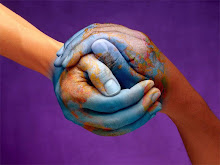
How much has to be explored and discarded before reaching the naked flesh of feeling. ~Claude Debussy
Do animals have emotions?
Having been involved with animals all my life, I have no doubt in my mind that they do. If you own a dog, cat, horse or any other animal, you know what I’m talking about. Animals are intelligent and feeling individuals; they know things that are not visible to the naked eye, often more accurately than us humans. But it wasn’t so long ago that the majority of people denied the existence of animal emotions. In fact, skeptics remain, many whom draw their conclusions from the lack of scientific proof; consequently the emotional lives of animals has not been researched much in the past mainly because researchers thought there wasn’t anything to study in the first place. Luckily research has evolved and proof is emerging from the woodworks of the scientific world. I guess at this point the question is not if animals have emotions, but rather what kind of emotions do they have.
Author and ethologist Marc Bekoff provides evidence of animals having emotions in his book, The Emotional Lives of Animals. The following story is an excerpt from his book:
“A few years ago my friend Rod and I were riding our bicycles around Boulder, Colorado, when we witnessed a very interesting encounter among five magpies. Magpies are corvids, a very intelligent family of birds. One magpie had obviously been hit by a car and was laying dead on the side of the road. The four other magpies were standing around him. One approached the corpse, gently pecked at it-just as an elephant noses the carcass of another elephant- and stepped back. Another magpie did the same thing. Next, one of the magpies flew off, brought back some grass, and laid it by the corpse. Another magpie did the same. Then, all four magpies stood vigil for a few seconds and one by one flew off.”
Often pet owners who say their pet is happy or sad or mischievous or sorry are accused of giving animals “human” emotions. This practice, also known as anthropomorphism, is widely criticized, and for a reason. as often it is connected to disturbing behavior such as dressing your dog up in human clothes or punishing your horse for something that happened long time ago because “he knew what he was doing.” But when it comes to feelings, why should humans have the monopoly on emotions? Look at the story of the magpies; how can you possibly interpret the behavior of the four magpies in any other way than through emotional vocabulary? The birds were obviously mourning the loss of their conspecific; they were sad.
Recently, I read the book Second Nature by animal behaviorist Jonathan Balcombe and Wild Justice by Mark Bekoff in which they explore the emotional and intellectual lives of animals. Even though I have been a big believer in animal emotions for quite a while, I don’t think I had quite understood the depth of the subject. It was fascinating to read scientific proof of emotions in creatures big and small. We often think that for example animals such as fish or rodents don’t have much going on in terms of intelligence or feelings, but turns out they can have feelings like empathy for each other. Mark Bekoff recounts a study made with rats, where caged rats were taught to press a level for food. Once this behavior was set in, however, the scientists added a twist; when the rat pushed the lever to get the food, another rat in the cage next door received an electric shock via the metal floor. What did the rats do? They stopped eating. Some individuals were known to starve themselves for as long as 14 days. I wonder how humans would “excel”to starve themselves in this sort of an experiment… (I also find it sickening that this was a study on rat empathy, but the empathy of the human researchers seemed to fail as they subjected other living beings to such cruel experiments…)
Jonathan Balcombe in particular writes eloquently about animal empathy, an emotion non-animal people often dismiss as solely a human emotion. But anyone who has ever been close to a horse when they have needed a friend, might know the capacity they have for empathy. And not just empathy, but unconditional support.
Two years ago I participated in an introductory workshop of the Epona method (check out my blog from June 16,2009 Lessons from a Horse’s Heart). At the end of the three day course, I felt like I was at the core of my true self, all my emotions were raw and real. Our very last exercise was an individual session with a horse that was assigned to us by the psychologist. My horse was Geo, a young paint gelding with whom I had worked with before, but had failed to find a deep connection. I was last to go and when it came my time to step up to have a private talk with Kathleen Barry Ingram, the facilitator, I was shaking with so many feelings I didn’t even know where to start unwinding them. It had been a long weekend observing others fall apart and collect the pieces as they made an attempt to re-establish themselves and I felt like an outsider in many respects. There were so many other people at the course who had real problems, people who deserved and needed the help of the horses and humans there. I, on the other hand, felt like I often feel; that I was there to support others instead of to receive support.
I approached the round pen where Geo was grazing at the other end completely disinterested in me. Kathleen pulled me aside and asked how I was feeling. I shrugged.
“I really feel like I don’t belong here,” I said. “All these other people are battling such major emotional issues and traumatic pasts. I don’t have that. They need this, they need the support.”
“So you feel like you don’t deserve to have that?”
“Yeah, I guess so. It’s always like this, you know, I hold up everyone else, but it’s only because I don’t need holding up. Kind of like there is a big pie and everyone else gets a big slice. In the end there isn’t much left for me. But that’s okay, because I don’t really need the pie.” I looked at Kathleen. “Do you know what I mean?”
Kathleen nodded. “But you know what? You deserve your own piece. You deserve this time, this sacred space of possibility. You deserve support, too. Look at all those people.” She motioned towards the 20 odd students sitting in their chairs, ready to observe my interaction with Geo. “They are here for you. Maybe you don’t feel deserving of their time, but they are here, nevertheless.” She motioned at Geo. “And look at that horse.” I looked at the horse, he couldn’t have looked less interested in Kathleen and me. “He is here for you.” She pushed on my back gently. “Now go and see what he has to bring to the table.”
I opened the gate to the round pen and walked in. Suddenly my hands were shaking. And not just my hands, but my whole body was quivering, as if it was a little blade of grass in a storm. Geo didn’t move, he didn’t as much as look at me. I started crying. I don’t know why I was crying, but there was an unstoppable wave of sorrow and sadness inside me that erupted to the surface so suddenly that I couldn’t stop it. I started sobbing, something completely uncharacteristic to me.
Overwhelmed by my emotions, I stopped about ten feet away from the grazing Geo. The last thing I wanted to do was force my emotions on him. Tears were flowing down my face, I don’t think I have cried like that since childhood. I looked at Geo and wanted to leave, to just run out of there and hide somewhere. But just then he lifted his head and looked back at me. Then he turned and walked over. He stopped in front of me. I was still sobbing and it felt like the top of my head was going to explode, the pounding was so strong, so blinding that I closed my eyes. An ache grew in my chest and even though I wanted to clutch my hands to it, I let my arms hang at my sides, exposing myself completely in front of this horse.
Geo lifted his nose and pressed it to my chest. I could feel him breathing into me. I could also feel something else, a strange sensation of lightness, as if this horse I barely knew was sucking the irrational sadness out of me like an enormous vacuum. I opened my eyes and Geo moved his nose to my forehead and performed the same exercise there, sucking away my pain, pulling it out of me and sending it off into the universe.
I stopped crying. Geo took his nose off my forehead. I swear the look on his face was playful. He grabbed the cloth of my sleeve between his lips and pulled on it. Come now, he seemed to say, let’s be done feeling sad.
Without thinking I turned and started running down the round pen. Geo squealed and took off at a canter, bucking and romping around like the teenager he was. I laughed out loud. I don’t think I have ever felt so alive and so light, like I could have perhaps taken off in flight. We ran another round and then Geo stopped to graze and I walked to the gate. The whole interaction had taken perhaps four minutes, but it had been an intense four; he had given me exactly what I needed, his time and his support – his empathy. I came through that gate with a new respect for horses as sentient beings.
Exploring animal emotions brings us face to face with many ethical questions; perhaps the real reason humans have so reluctantly studied this subject. What you don’t know can’t hurt you, right? If we admit to animals being sentient beings with rich emotional lives, how do we possibly justify the way we treat them? What does the current treatment of animals tell us about ourselves? I for certain think about this question on a daily basis. Do we have the right to use horses for our own pleasure? And how do they feel when we do? For thousands of years we have assumed an inferior role over nature and other animals. Perhaps it is time for us to notice and acknowledge animals as who they really are; subjects of their own lives, living and feeling beings
Geo and the other horses at the Epona workshop exposed the very essence of horses. Ever since I had this experience, I have not been able to stop seeing the hidden meaning behind each horse-human relationship I encounter. When we are initially drawn to horses, perhaps it is not the action of riding or training or driving or grooming that touches us so deeply, but rather the soul of the animal we are connecting with, or rather, who is connecting with us. Horses, even the ones that live under stressful conditions, have the capacity to emotionally heel humans. Often we don’t know this when we meet them, but the potential is always there. Horses are altruistic; they give selflessly, even when the human is not paying attention.
In his book Second Nature Jonathan Balcombe tells so many touching stories of animals caring for each other, working together, striving to understand each other, seeking comfort from each other – even in the most surprising situations. I want to share one particular story with you, because it perhaps demonstrates the capacity that animals can have for empathy, even across species. This is a story about Washoe, a chimpanzee.
Balcombe writes: “… Beatrice and Allen Gardner of the University of Oklahoma taught American Sign Language to Washoe. When Beatrice became pregnant, Washoe became more attentive than usual and regularly asked questions (using sign language) about the baby. Washoe had had two pregnancies of her own, both of which had resulted in the infants’ deaths. When Beatrice returned after an extended absence, Washoe acknowledged her return but was aloof. The teacher explained that she had had a miscarriage and signed to Washoe: “My baby died.” Washoe looked at Beatrice and signed “Cry”, then signed “Please person hug” as Beatrice was leaving.”
Sometimes there are no words for what we feel when we are with our animals and it is because emotions are beyond words. In fact, spoken language can even block being able to feel and read the emotions of others. Perhaps that is why animals are better at it than us humans are, they are used to communicating nonverbally. My written account of the moment with Geo doesn’t do justice to what really happened, because there are no words to truly describe the matters of the heart. All I can say is that I wish to connect again and again to that sacred place he opened up in me.
~K
“It is of interest to note that while some dolphins are reported to have learned English – up to fifty words used in correct context – no human being has been reported to have learned dolphinese.”
- Carl Sagan
Showing posts with label Kathleen Barry Ingram. Show all posts
Showing posts with label Kathleen Barry Ingram. Show all posts
Friday, March 11, 2011


Subscribe to:
Posts (Atom)