
I noticed the couple with the baby as soon as I boarded the airplane. It was hard to miss them, because the mother, who was holding the squirmy infant, was blocking the aisle and causing a massive backup of boarding passengers. Once I settled in my seat, I realized the family was sitting two rows down. I watched the mother try to settle down the baby, who appeared to be about eight months old. But the little boy wasn’t going to have it. Every time his mother sat down in her seat, he started crying. So, the mother opted to wander up and down the aisle, despite the other passengers trying to get to their seats.
Soon everyone was sitting down, except the mother with her baby boy. She continued walking up and down the aisle, talking to the child in a soothing voice, until the stewardess asked her to sit down for takeoff. The mother sat down and instantly the infant started crying loudly. He squirmed in his mother’s arms and despite the efforts of both his parents, he wouldn’t calm down. Soon his scream escalated to a wait. The plane was already moving, heading to the end of the runway, but the mother undid her seat belt and stood up, holding the flailing baby. The moment she was standing, the boy quieted down, gurgling happily.
The other passengers looked alarmed. Surely the woman wasn’t going to stand during takeoff?
“Excuse me,” a stewardess called from the back sternly. “Please sit down immediately!”
The mother made an attempt to sit, but when her baby started screaming, she sprung up again, her face distraught. Her husband touched her arm, but she ignored him.
Suddenly another stewardess emerged from the front of the plane. She was young, barely in her twenties.“Please,” she said, “you must sit down or we can’t take off.”
The mother looked at the young woman and clutched her child, who was quiet again.
“But I can’t, he won’t settle,” she said.
“I understand, but you must sit down or we have to stop the plane,” the young woman replied. She put her hand on the mother’s shoulder and guided her towards her seat. The mother sat down and as soon as she was in her seat, her child protested with a loud wail. The mother struggled to hold her kicking child. I could see she wanted to stand up again.
The stewardess knelt by the woman’s seat.
“Listen,” she said. “I realize this is a very stressful situation for you. You are worried about your child. But it is much less dangerous for him to cry in your arms than for you to stand during takeoff. Don’t worry about the other passengers; they can handle a little baby crying.”
I could see tears pouring down the mother’s cheeks; her husband wiped them away. The stewardess put her hand on the mother’s knee and looked her earnestly in the eyes. I strained to hear her words over the screaming baby.
“I can see you are a good mother, trying to do the right thing. Keeping your child safe is right thing. Just take a deep breath. Before you know it, you will be able to stand up again.”
The mother sighed and suddenly, as if someone had flipped a switch in the child, the baby stopped crying. The change was so abrupt that my husband reading a book next to me looked up and said:
“What happened, is the baby okay?”
The baby was okay and so was his mother. The young stewardess walked back to her seat and as the plane took off into the sky, it was completely silent in the cabin. A few hours later, when we arrived at our destination, I saw the family leaving with a happy and calm baby. I marveled over the wisdom of the young stewardess, but also the baby’s reactions to his mother’s emotions. It was obvious that as soon as the mother calmed down, the baby, feeling his mother’s energy change, followed suit. Children, just like horses, are masters at picking up emotional messages, even the ones we don’t know we are sending.
I sometimes wonder how I was able to escape this lesson in horsemanship for so many years. I was, of course, told that horses could “smell fear” a mile away. But, on the same token, I was told to cover that fear up and act brave, even aggressive. As if that would fool a horse? I personally think that this particular piece of advice has caused hundreds if not thousands of horse-related accidents in the world. Horses always know how we feel, no matter what we do. It is when we ignore those emotions in ourselves that horses get suspicious and even defensive.
Just this weekend I was reminded about the mastery of emotional intelligence horses possess. A friend of mine wrote me an email after she had visited my horse with her eight year old daughter. My friend and her daughter had brought a few carrots to give to Little Love, but, when the actual time came to feed the carrots to my mare, who was standing in her paddock close to the fence, my friend’s daughter became scared of the big horse.
"Go ahead, it's safe to give Lilo the carrot," my friend urged her little girl who was clutching the carrot in her hand.
Carefully, her daughter pushed the carrot towards Little Love through the fence. Soon the carrot was only a foot from Little Love's nose, but instead of taking it, the horse stood stock still, looking at the child with her ears forward. Quickly my friend’s daughter pulled her hand back.
"Mom, I'm scared," she said.
My friend came to stand closer to her daughter, assuring her again that it was safe to give the carrot to Little Love. Again the little girl brought the carrot slowly towards the mare, until it was right in front of her face. But the mare merely looked at the child and didn’t make an attempt to reach for the treat. The girl pulled her hand away, telling her mom she was too scared to feed the horse. My friend took the carrot from her daughter and brought it toward Little Love in the exact same place the little girl had brought it. My horse, as if seeing the carrot for the first time, immediately stretched her nose out and took it.
"I couldn't believe it," my friend wrote in her email. "It was obvious that Little Love could feel my daughter's fear and didn't want to scare her any further by taking the carrot. Now I know what you mean when you talk about emotional intelligence and how horses always know how we feel."
And don’t they do exactly that, know how we feel? Sometimes they know even better than we do. But we shouldn’t write off our own ability to feel the energy of others, because we all have that ability. Don’t they say that 90% of our communication is non-verbal?
I am sure all of us have been in the same room with someone who is in a bad mood. Or worse, we know someone who is an eternal pessimist. You feel their negative energy swarming around you, eating away at your good mood. These are the energy thieves of our lives; people who suck away our positive emotions as if they were mere dust bunnies under our couch.
I believe emotions can travel over time and space, that they have no boundaries when it comes to the material world. I haven’t always thought this way, but the more emotional awareness I possess, the more I discover about the power of emotions. To feel someone’s pain, you don’t necessarily need to be in the same space with them. In fact, you could be miles away.
Ten years ago, far before I had ever even heard of emotional communication, a friend of mine had a bad accident. At the time I was thousands of miles away in a different time zone, sleeping. At exactly the time of the accident, I jolted awake. I looked at the clock; it was 1:15 in the morning. I knew something bad had happened and I knew this without a doubt. I dug out my cell phone and placed a call to the other side of the world where it was day time just to hear the bad news.
This is an extreme example, as it does not always take an accident to “feel” someone from a distance. I have often thought of an old friend or acquaintance, someone I haven’t talked to for a long time, even years, and just minutes later that person calls me or sends me an email. We do it all the time, send our emotions and energy into the universe, without realizing that there are others out there receiving it. That in mind, I ask you the question: what kind of energy do you want to send into the world today?
This week I was teaching a new student. She is a very technical rider, who wants to learn more about her seat and how she can be effective on a horse. She was riding a high strung mare, who was trying her hardest to understand what the human on top of her wanted. The mare wasn’t doing too badly. My student, however, was highly frustrated. She had only negative things to say about her mount, a horse that she rode on a once a week basis.
“She is so crooked,” my student moaned for the umpteenth time. “I’m trying to keep my thigh down, but it’s so hard when the horse is not cooperating. It’s so frustrating.”
Having listened to her complaints about the horse for quite a while, I finally decided to address the issue.
“Let’s talk about your frustration for a moment,” I said. “How do you think the horse feels when you feel frustrated?”
My student was struggling to stay with the horse’s trot, but she still managed a quick look at me from under her brow. It was a look of confusion. This was only our third lesson together, so she had no idea what to expect. I thought about the young mother on the airplane with her crying baby. Just like her, my student was unaware of how much her emotions were affecting the situation.
I asked my student to transition to walk. I was fairly sure the proceeding conversation would take her out of her comfort zone and we could communicate better face to face. I repeated my question.
“I don’t know,” my student answered. I could see she was thinking. I tried again.
“Why do you think she runs away from you?”
My student gave me another glance. She wrinkled her brow. I continued.
“Horses communicate with emotions; they know how we feel and they use that as information. I know you want to have the perfect ride on this horse. But I think your frustration and negative attitude towards her is going to prevent you from achieving this perfect ride.”
My student looked at me quizzically.
“It will never be perfect, because there are so many things that just don’t work,” she said.
“But there are also so many that do,” I pointed out. “I know you are frustrated that you can’t keep your thigh in the correct position, but you did it many times today. Just as this horse was at times not crooked, but straight.”
When my student didn’t respond, I continued: ““She is doing her best, just like you are. In fact, you both deserve a bit of love and appreciation. How about, instead of getting frustrated, you could try a bit of empathy,” I said. “Thank the horse for trying so hard. Send her some love. Appreciate her effort.” I smiled.
My student looked away. I could tell we were treading through an area in life she was not familiar with.
“If you want to ride this horse well,” I pressed, “you have to get her on your side. At the moment you are fighting each other. Why not join forces and do it together?”
Our conversation continued for over thirty minutes. In the end, my student participated carefully, but I’m not sure she truly understood what I was after. She seemed very uncomfortable talking about her emotions and even more uncomfortable talking about the horse’s emotions. But, I strongly believe that once upon a time when she first started riding, these very emotions where the thing that drew her to horses. Perhaps she has never been conscious of that before, but if she continues to ride with me, I will definitely keep asking her to face these important questions.
A few weeks ago I found the work of Japanese Dr. Emoto by accident. According to Dr. Emoto, an ice crystal of distilled water exhibits a basic hexagonal structure with no intricate branching. Emoto claims that positive changes to water crystals can be achieved through prayer, music or by attaching written words to a container of water. In other words, human vibrational energy, thoughts, words and music affect the molecular structure of water.
Sounds pretty incredible, doesn’t it? Especially when we remember that most of our body is made of what else, but water. I looked at pictures of these ice crystals and marveled over the beauty of how positive words and intent had managed to change the consistency of water. Words like “love” and “gratitude” produced the most beautiful ones when other words such as “murder” portrayed muddled, ugly formations.
Dr. Emoto is criticized for going directly to the public with misleading claims that violate basic laws of physics and are based on methods that fail to properly investigate the truth of the claims. I agree, perhaps Dr. Emoto’s experiments are not the most scientific kind. But, on the other hand, how do you measure emotion or intent or prayer? Sounds impossible. We can only choose to believe in their power, even if it cannot be proven scientifically.
There is an old Finnish saying: “Niin se metsä vastaa, kuin sinne huudetaan.” The literal translation of this is: The forest will answer as you call into it. In other words, what you hear is the “echo” of your own “voice”. I believe this is the lesson horses try to teach us day after day. They are the mirrors of our existence, they show us who we are and what we feel, not to judge us, but to help us find the correct way to be in this world.
When I go to the barn to visit Little Love, I go there with the purpose of connecting with my horse emotionally. In her presence I feel a stillness I cannot find elsewhere. I believe this stillness reflects the understanding we have for each other; we have nothing to hide, but everything to reveal, vulnerabilities and all. If I am distracted, the phone rings or my busy life interferes with my thoughts, she disconnects from me immediately and the Zen is gone. So, to avoid this, I try to stay with her, in the moment, to feel the peace I can no longer live without. In fact, every day I hope to take a part of Little Love’s peace with me and share it with the rest of the world. But, compared to my horse I am still a minor league player in this game called emotional intelligence. I want to think, however, that if I froze the water in the plastic bottle sitting on my desk, it would freeze into magnificent and life altering ice crystals.
Love, ~K
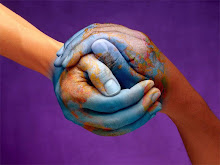
Ps. The above picture is of the frozen water from the Fujiwara dam after Buddhist monks had offered a prayer over the toxic water.


